Learnings/Unlearnings: Stories of Media and Mediation
Indira Lemouchi; Teresa Elkin Postila; Emilio Brandao; Wanjiru E Karanja; Sezin Sarıca; EcoJust Studio – Isabel Löfgren, Tatiana Sokolova, Oldouz Nejadi
CATEGORY
Welcome to Learnings/Unlearnings Reader #8: Stories of Mediation and Media, edited by Karin Reisinger and Meike Schalk. The Reader brings together contributions from the conference section “Building and Playing: Stories of Mediation and Media,” including essays by Indira Lemouchi, Teresa Elkin Postila, Emilio Brandao, Wanjiru E. Karanja, Sezin Sarıca and a workshop by EcoJust Studio with Isabel Löfgren, Tatiana Sokolova, and Oldouz Nejadi. They were presented at the conference Learnings/Unlearnings: Environmental Pedagogies, Play, Policies, and Spatial Design, which took place in Stockholm in September 2024. They give an account of their practices of collaborative and participatory learning, generously sharing their ways of generating occasions for the embodied experiences of environmental pedagogies through various media, including sound, water, audiovisual storytelling, photovoice, inventories of fragments, and untamed encounters. Thus, they assemble more-than-human mediations of people, environments, cultures, materialities, tools and tactics.
At the Learnings/Unlearnings conference we sit densely packed in one of the project rooms of the art space Färgfabriken, taking part in the session on media and mediation. Indira Lemouchi invites us to sonic exercises of connecting to the environment and to each other. Crowded, concentrated, hectic, we make space and time for our sonic agencies. Indira orchestrates our voices, sounds, and breaths. Raising our voices—or rather our unfamiliar bodily tones in togetherness—we get louder, pause, get out of breath. Drawings accompany the sounds and the instructions, but maybe our mind has made that up after all this time. The joyful experience of our sonic collaborative agencies stayed, however, and its creation is reflected in the contribution “Sensing children’s Agencies and Sonic Ecologies Through Participatory Practice,” sharing exercises, experiences with children and the conceptualisation of sounding and listening.
A series of more-than-human adventures is offered by Teresa Elkin Postila. In “Preschool Children’s Watery Relations and Realities — Adventures in Multiple Timeplaces,” she describes pre-school children’s encounters with water. Based on concepts of contact zones and scales, developed by feminist theorists, Elkin Postila has created situations with children, researchers, and pedagogues in which water becomes explored as timeplace, imaginary, and a hydrosocial cycle. Her approach recognises the young child as a social actor with the capacity to effect change in the present.
Emilio Brandao in “‘This is my Hammarkullen…’— Listening to Community Storytelling” describes a community course for audiovisual narratives in Hammarkullen, a late modern city district of Göteborg in Sweden, where many cultures live together. With his brother, Daniel Brandao, he developed this method for architecture students, that was then further developed with local residents, and later evolved into an extensive course in collaboration with a people’s university where participants produced autobiographical films. Unveiling generous insights into the daily lives and concerns of the people living in Hammarkullen, the project contributes to reclaiming the narratives of their own life-environments.
Also using an audiovisual method, Wanjiru E Karanja reports from “Amplifying Youth Voices: A Photovoice Approach in Pedagogical Settings,” which she applied in a school setting in Brisbane, Australia. Equipped with a photovoice instruction booklet and a questionnaire, students were asked to explore their environments in terms of active, social, wellbeing and intergenerational spaces, as well as barriers. The study was part of a research project addressing inclusive campus environments with the aim to explore how spatial practice can promote health, well-being, and social belonging through the design of school environments. The audiovisual media captured students’ voices underscoring their experiences in their everyday environments.
In “Re-/Non-reading Fragments: Inventories for Architectural Thinking,” Sezin Sarıca investigates how inventories of fragments can operate as generative tools within architectural thinking and design pedagogy. Sarıca proposes the acts of re-reading and non-reading as complementary modes of engaging architectural materials, enabling both critical reinterpretation and intuitive exploration. Through pedagogical workshops and speculative drawing research, the study demonstrates how inventory-making can expand the methods through which architectural knowledge is produced and represented.
“Playing in Tamed and Wild Environments: Five Steps to Learning (and Unlearning) with Artistic Methods in Non-Artistic Disciplines” is a paper contributed by EcoJust Studio, namely Isabel Löfgren, Tatiana Sokolova and Oldouz Nejadi, following another orchestrated encounter at the conference. Combining storytelling approaches, bodily exercises, creating a shared keyword forest, and rediscovering language in small group conversations collectively, EcoJust Studio invited the conference audience to practice what they call “untaming” of higher education to respond to current urgencies.
Contents
Sensing Children’s Agencies and Sonic Ecologies Through Participatory Practice
Indira Lemouchi
Conceptualising children’s ecologies, in the context of climate change, often engenders responsibility and fear. Without diminishing future precarity, we must critically examine hyper-fixation on futurity as the principal frame within which children can actively engage with climatic processes. Children are romanticised as adults, leaders, or teachers ‘in becoming’, rather than as fully entangled participants in an already changed and ever-changing world (Blazek 2025). On this view, what understandings of children arise if we listen with situated ecologies through sonic entanglements and agencies? This paper begins with an exploration of sounding and listening beyond the binary, an orientation that critically underpins my practice. Following this, I introduce sound mapping, a practice-based methodology developed in conjunction with my PhD thesis. Herein, I propose sonic methodologies to interweave the messy, in-flux, and dynamic ways children always-already agentively engage in their environment. Lastly, I turn to ‘adult’ soundscapes and posit that the co-produced sonic signatures of the ‘Learnings/Unlearnings’ conference continually unfold as unfixed reverberations within our situated experiences, mutually subverting and reinscribing institutional spatial conditions. Punctuated with a series of sonic cues that prompt drawing, breathwork, and embodiment, this text invites participation to integrate the discourse as a resonant, material, and felt entanglement. Sensing ‘adult’ sonic subjectivities better equips us to attend to the dynamic ways in which children agentively engage with sonic ecologies. From the claps at the end of presentations to the echoing of inspiring quotes, each affect is mutable and transversal; by attuning to these canons, we can reflexively re-imagine sonic agency and pedagogy (Kanngieser 2015).
Turn to your silent companion: your shadow. Meet it at a surface. Trace your fingers across the silhouette. Map its ephemerality and perceived silence. Ask it three questions, pausing between each to let silence respond.
How did your voice sound: melancholy, sarcastic, or tentative?
Are shadows silent?
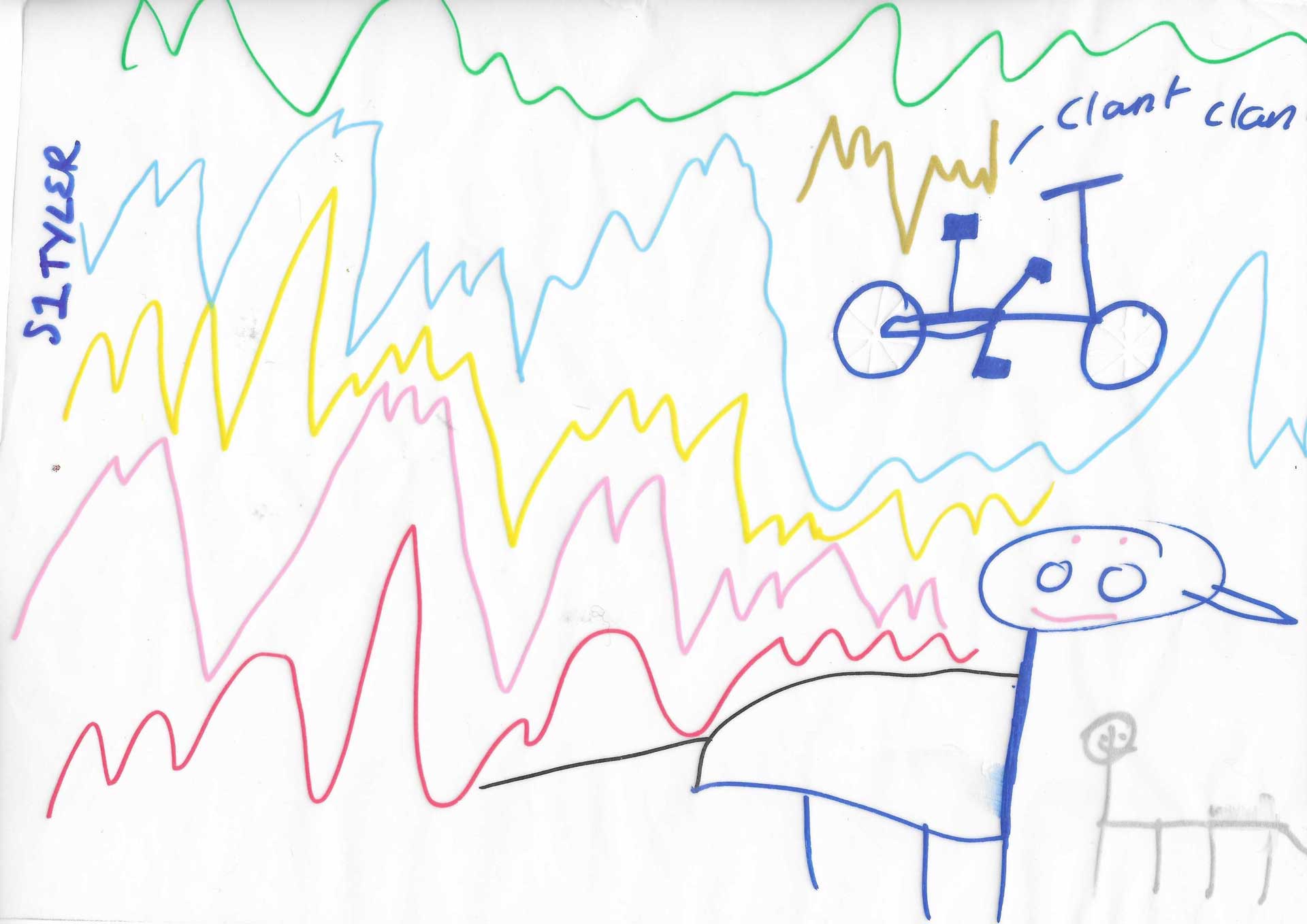
{Figure 1.}
Conceptualising sound necessitates listening practices. Listening modalities are variable, entangled, and productive. Rather than being binary opposites, listening and sounding are co-constitutive and multiplex. I broaden my definition of sound to incorporate imaginative vibrations, lower frequencies, and infrasound (Campt 2017; Levan 2020; Kanngeiser 2015). If we understand ‘quiet’ as “a modality that surrounds and infuses sound with impact and affect, which creates the possibility for it to register as meaningful” (Campt 2017, 4) then LeVan’s (2020) call to ‘listen below’ to our elemental exchanges demonstrates how ‘quiet’ and more-than-aural frequencies continuously enrol our bodies into a vibrational ‘commons’. Felt frequencies can be inaudible to the ear yet reverberate non-the-less, physically and imaginatively.
Quieter frequencies reveal the ‘unspoken’ and challenge ahistorical and disembodied imaginaries of space, land, and materials. Aural architectures that figure space as flat, empty, and obtainable planes primed for demarcation reinscribe the white disembodied ear as ‘hungry for the felt confirmations of square pegs in square holes, for the satisfactory fit as sound knowledge slides into its appropriate place’ (Robinson 2020, 51). Environmental discourse is situated within colonial histories of dispossession and control which have often relied on ocular hegemony to elicit empirically driven ‘knowledge’. While sonic practices can dismantle entrenched structures that maintain status quos, sound carries its own history of subjugation and control (Kanngieser 2023). This paper conceives of sound as entangled, material, and more-than-aural; sound physically emerges through material linkages and assemblages. As sonic bodies we are intimately woven into historical fabrics of environmental resonance.
Rub your hands together fast for 30s. Through your hands frictional heat, sense the infrasonic residue of this physical-material act, imagine holding an energy sphere.
How does this past sound resonate physically?
Does something have to be audible to be sonorous?
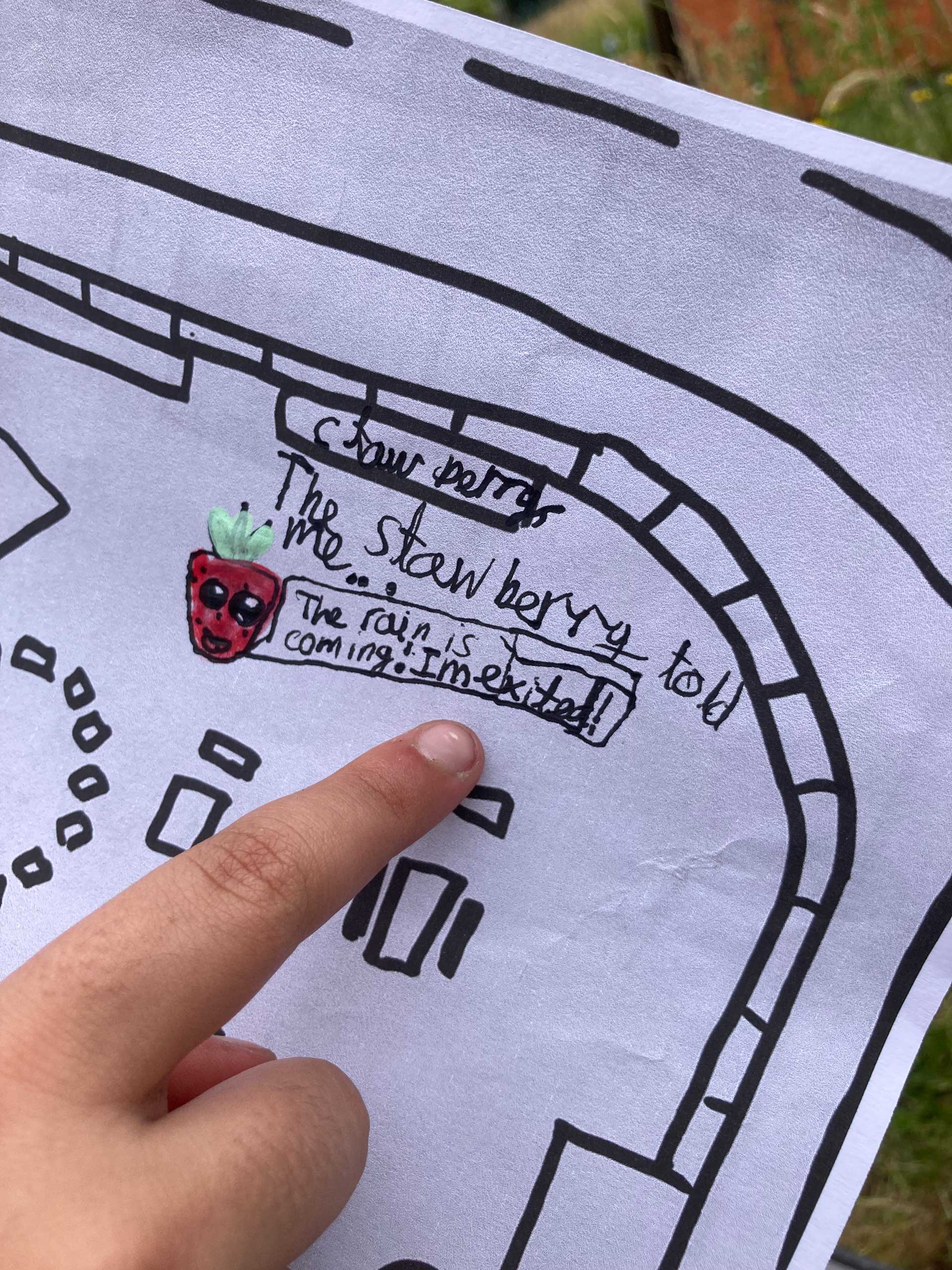
{Figure 2.}
I understand sonic practice as a multisensory experience. If “expanded listening starts with the ear but goes beyond it to include the whole body” (Gallagher et al. 2017, 621), then I posit more-than-aural entanglements as fundamental to sensing how things resound physically, energetically, and imaginatively. I propose sound mapping to engage with the multi-nodal resonances of ecology. Prompts such as ‘what are these plants’ colours saying?’ and ‘how might this taste sing?’ are examples of how sound and listening interleave with all senses (Gallagher et al. 2017). As a result, sound maps are iterative, speculative and imaginative records that arise from affective entanglements with sonic fields (see figures 1, 2, and 3). Sound mapping as a practice invites all embodied senses to witness and actively participate in these co-constituted entanglements to reflect and reimagine environmental sonic canons. Sound mapping multi-sensorially and ‘listening below’ softens sensory margins and resists placing nature as externally bounded beyond human entanglement. Rather than something ‘out there’ nature is constantly resounding as the bacteria in our gut, the spit from our laughter, and the air we breathe because “the world is not for humans […] (but) the world is rather with humans” (Kanngieser 2015, 83). While nature flows through us, with us, and as us, sound mapping creatively traces and attunes to these ever-shifting co-ordinates.
Put your hands over your ears and listen from within your body; use your fingers to tap your head to sense vibration.
Can you hear your heartbeat, breath or squeaky joints?
Do our vibratory insides reveal somatic vulnerabilities?
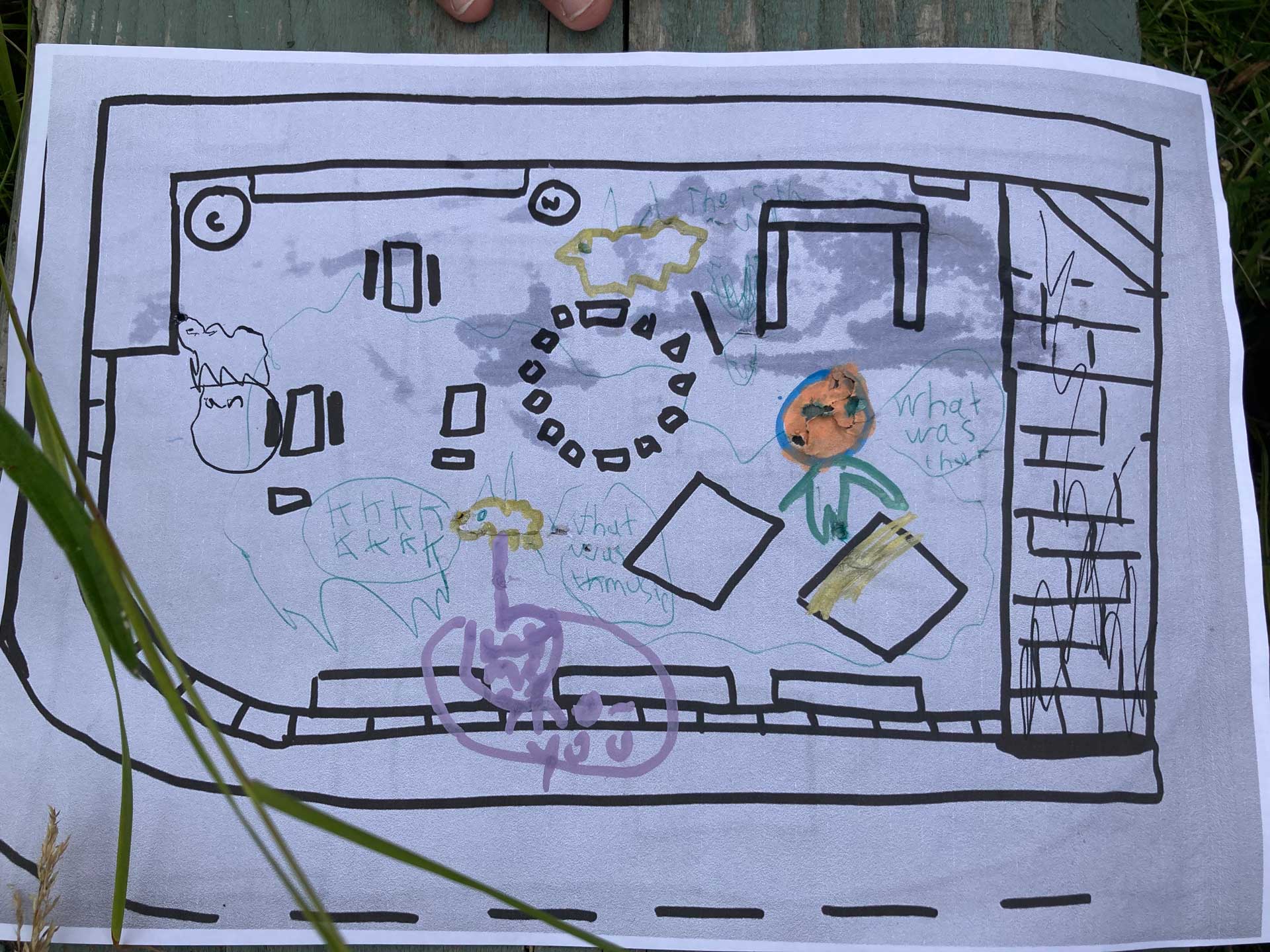
{Figure 3.}
I forward agency as a situated experience of self-and/or collective actualisation through multivalent intensities, assemblages, and processes. As both deeply subjective and profoundly relational, agency emerges as every-day and subtle, as well as profound and transformational. Agency can be contradictory; it can occur in tandem with loss and listlessness, being deeply nested within the field of intersectional multiplicity. Departing from limited ideas of children being innately connected to the ‘purity’ and ‘innocence’ of natural spaces, this paper situates ‘children’s agency’ within critical discourse that unpicks colonial markers of ‘childhood’ and ‘environment’. Within environmental discourse, innocence has been “the exclusive possession of white childhood” (Nxumalo and Ross 2019, 504) denoting ‘inherent’ access to ‘pure’ and ‘obtainable’ natural landscapes. Conversely, children of colour are assigned to the margins of urbanity and ‘nature deficit’, negating their already-existing ecological intimacies. Children’s agency is differently placed and spaced across varied childhood experiences. Far from a monolith, agency is in-flux and multiple, requiring constant re-evaluation and integration within critical discourse.
Within pedagogy, we must question the affective and atmospheric hegemonies of Anglo-European learning in innovative ways. As adults, we must decode the ways in which we listen and (un)learn together; how might the markers of adulthood inhibit opportunities for exploration and imagination? In delivering this paper at the ‘Learnings/Un-learnings’ conference, I invited participants to intervene in the academic formalities functioning as unspoken order through participatory sonic practice. Transmuting from live performance to written text, this paper highlights how these sonic codes transcend the conference hall and follow us into our private sphere. Building on the aural architectures established at the conference, might we follow the sounds of the institution in tapping a keyboard or in placing a comma as it pulls a breath? Creative sonic methodologies open-endedly reinscribe the body and somatic registers, troubling silence/noise or listening/sounding dichotomies, unveiling (re)productions of power. How might we incorporate sonic and sensorial pedagogies as legitimate means of knowledge production, spatial practice, and environmental learning? Deeply felt pedagogies and agencies can manifest in unruly exploratory circumstances, revealing unquantifiable possibilities for inter-relational intelligence.
Recognising children (and adults) are always-already relating to the environment, this paper calls for a conceptualisation of children’s sonic agencies that attends to these material and sensorial ecological-constellations. Forwarding a non-binary conception of sounding and listening to include more-than-aural frequencies, I highlight that ‘quiet’ attunement and ‘listening below’ push the envelope of what counts as sound (Campt 2017; Levan 2020). Soundscapes are negotiated, multiple, and contentious as they (re)produce histories and norms. Sonic methodologies can be an axis for unlearning these entrenched sonic conditionalities; however, sonic practices are not inherently decolonial or progressive (Kanngieser 2023). I propose sound mapping as a multi-faceted practice for re-imagining space to cultivate novel intimacies within sonic-material contexts. Sound mapping can propagate multi-sensory and open-ended affinities to the environment, etching out agency’s (in)visibility and (in)audibility. I problematise imagining childhood as impending ‘maturity’ and essentialist nature-based signifiers such as ‘innocence’ and ‘purity’ underpinning said ‘maturity’. These concepts denote a predetermined innate attunement to nature’s order, denying children their varied and situated entanglements with the environment (Nxumalo and Ross 2019).
By integrating participatory sonic practice, this paper expands discursive signification by interplaying sonic vignettes, situating our sounding bodies, and ventilating imaginaries of academic fixity. I argue, in re-imagining markers of sonic acceptability percolating entangled aural architectures, adults might attune to children’s agencies in more playful, exploratory, and embodied ways. What kind of stakes do adults have in children’s ecological futures? How does sound function as an agent in the maintenance of spatial conditionality? Can we rework our relationships with sound to attune to ecology’s vibrational liveness? In conclusion, sonic practice, namely sound mapping, envelops bodies and material contexts in ways that elucidate mutual vulnerabilities and interdependencies. It offers novel, collaborative and nuanced ways of knowing space and our embodied entangled place within it.
Captions and credits
Blomfield Gardens, London. Photos: Indira Lemouchi
References
Blazek, Matej. 2025. “Children’s Geographies II: Adults.” Progress in Human Geography 49 (1): 119–130. https://doi.org/10.1177/03091325241298686
Campt, Tina M. 2017. Listening to Images. Durham, NC: Duke University Press.
Gallagher, Michael, Kanngieser, A.M., and Jonathan, Prior. 2017. “Listening Geographies: Landscape, Affect and Geotechnologies.” Progress in Human Geography 41 (5): 618–637. https://doi.org/10.1177/0309132516652952
Kanngieser, A.M. 2015. “Geopolitics and the Anthropocene: Five Propositions for Sound.” GeoHumanities 1 (1): 80–85. https://doi.org/10.1080/2373566X.2015.1075360
Kanngieser, A. M. 2023. “Sonic Colonialities: Listening, Dispossession, and the (Re)Making of Anglo‐European Nature.” Transactions of the Institute of British Geographers 48(4): 690-702. https://doi.org/10.1111/tran.12602.
LeVan, Marlo. 2020. “Listening Below: Two Variations on Fugitive Sound.” Review of Communication 20 (4): 388–94. https://doi.org/10.1080/15358593.2020.1819556
Nxumalo, Fikile, and Ross, Kihana M. 2019. “Envisioning Black Space in Environmental Education for Young Children.” Race Ethnicity and Education 22 (4): 502–24. https://doi.org/10.1080/13613324.2019.1592837
Robinson, Dylan. 2020. Hungry Listening: Resonant Theory for Indigenous Sound Studies. Minneapolis: University of Minnesota Press.
Preschool Children’s Watery Relations and Realities — Adventures in Multiple Timeplaces
Teresa Elkin Postila
This paper seeks to highlight the diverse contact zones between water and preschool children across multiple scales, zones in which children, water, and the more-than-human are already entangled, and in which they may potentially become further engaged. The aim is to begin from the children’s situated experiences and concerns of environmental issues and climate change, offering, in effect, a bottom-up perspective on environmental education. More importantly, this approach recognises the young child as a social actor with the capacity to effect change in the present. I argue that it is upon adults, researchers, educators, policymakers, and others, to respond meaningfully to this engagement, it is our response-ability (Haraway 2008, 88-89).
Water is often treated or understood merely as a backdrop, a consumed and taken-for-granted resource (Elkin Postila, 2021, 33; Pacini-Ketchabaw and Clark, 2016, 99). This is particularly evident in the context of Swedish preschools, which serve as the point of departure for this paper. In such settings, water is used routinely for hygiene, for activities such as painting and working with clay, and for consumption during lunch and snack times. Water is embedded in the materials that constitute the everyday preschool environment: in paper, food, plastics, clothing, and even in the very fabric of the preschool building.
Water connects all more-than-human and human life, geophysical processes, ecosystems, geosystems, history, politics, economics, the social and the cultural (Linton and Budds, 2014). In contemporary times of anthropocentric driven disasters, the paradox is that the heavily by human exploited water, is the life source for all living, more-than-human and human.
Beyond its physical presence, water also permeates the preschool through memories, imaginations, facts, fantasies, and popular culture, subtly flowing through daily activities and practices. In doing so, it blurs conventional boundaries of time and place, weaving together past, present, and imagined futures.
Water exists and operates at multiple scales, physical, cultural, and affective, and in diverse ontologies. It is always already ethical, calling for an attentiveness to the relations and responsibilities it invokes. As such, water is not only a material substance but also a matter of ethics, entangled with the ways we live, learn, and relate in early childhood education.
This paper draws on my completed PhD project in Early Childhood Education and Care, an interdisciplinary study conducted in collaboration with preschool children aged three to five (Elkin Postila, 2021). The project focused on exploring water as a more-than-human actor through a variety of approaches aimed at developing and creating methods that encourage preschool-aged children’s participation, emotional engagement, and understanding of environmental issues (Swedish National Agency of Education, 2018).
I engage with the concept of contact zones as developed by Mary Louise Pratt (1991) and Donna Haraway (2008), an approach that resonates with my academic background in biology and the geosciences. This paper seeks to draw attention to the various contact zones between water and preschool children, unfolding across multiple scales. These zones, I argue, reveal specific intimate, local and global relations and realities, spaces in which children, water, and the more-than-human are already entangled, and in which they may potentially become further engaged. Such contact zones also offer opportunities for adults; researchers, educators, and others, to connect with and within these entanglements (Elkin Postila, 2021).
In my theorisation, I draw on Anna L. Tsing’s (2012, 2015) explicit elaborations on scales, alongside the more implicit yet persistent engagements with scale found in the work of Donna Haraway (2008, 2016) and Isabelle Stengers (2015, 2018, 2023). These scales encompass the intimate, the local and the global, disciplinary and popular cultural domains, as well as geophysical processes, ecosystems, geosystems, history, politics, economics, and the social and cultural (Elkin Postila, 2021).
Below I will present some of the contact zones that emerged in my research project where children, researchers and pedagogues create watery contact zones through different connecting relations which flows through data, the Geosciences and Early Childhood Education and Care, previous research, thematic maps, novels, animated films and series, children’s books.
Maybe I am drinking dinosaur pee or grandma wee?
The above quote sparked a cascade of questions, observations, and attentiveness, each of which gave rise to new and evolving contact zones. Following the pee-quote, conversations among the children, myself, and the educators turned to questions about wastewater treatment plants and the various purification processes involved, from mechanical to chemical. The children inquired about substances that are difficult or even impossible to remove from wastewater, aligning closely with Donna Haraway’s (2012, 301) reflections on the persistent traces of pharmaceuticals, such as hormones, in water systems.
These conversations led to explorations of how water can be cleaned, prompting investigations into different filtration and purification devices. Many of the children had first-hand experience of the effects of contaminated water, on themselves and on the more-than-human world, which deepened their engagement. This, in turn, led to inquiries into the capacities of different organisms to consume various types of water, and further into the properties of water itself, from high salinity to freshwater, and the organisms capable of surviving in such environments. These explorations eventually turned toward the Baltic Sea and its unique ecological conditions.
Ice wolves, ice and water dragons, mermaids, sharks, and brightly coloured fish…
In the contact zones of imaginary waters, I found myself utterly lost. As a researcher, I struggled to connect. Ice wolves? Dragons of ice and water? Mermaids and sharks? Tropical fish in a narrow inlet of Stockholm? I was disoriented. My adult mind sought rational explanations. Dragons, could they be Komodo dragons? Ice and water dragons, perhaps inspired by the frozen waterfall we had passed on our way to the inlet? Mermaids, were they the haunting, siren-like figures from myth, luring sailors into the depths? And the brightly coloured fish, could they be perch, with their red fins and green-yellow stripes, native to these waters?
Along with the educators, the children guided me. They helped me enter the contact zones of imaginary waters, spaces where dragons from animated films and Nordic folktales coexist with talking mermaids and sentient fish. Through storytelling, gestures, and insistence, they urged me to catch up with what mattered. They (re)introduced me to Pokémon, Hiccup the dragon trainer, Ariel, Nemo, and the shared fascination with vocal cords, human, piscine, mermaid, and dragon alike.
This was a space of speculative fabulation, of science fiction water, a mingling of fact and fantasy, of ecological knowledge and imaginative world-making. As a researcher and an adult, I had to catch up, to attune myself to the realities children inhabit, where the boundaries between the real and the imagined are fluid, and where water is as much a site of wonder as it is of science.
Who is flushing the toilet again?
Toilets are a standard feature in Swedish preschool washrooms, and many of us have encountered children’s fascination with flushing them or turning taps on and off, often resulting in gushing water and puddles on the floor. Some have also observed children experimenting by flushing not only bodily waste but also toy cars, paper, toilet rolls, and other objects.
This curiosity of flushing and opening/closing taps was further explored within the project and elaborated upon by several children. Their interest led to a series of inquiries into different forms of water: rainwater, wastewater, stormwater, drinking water, and ice water (Elkin Postila, 2021). These contact zones, in turn, generated questions about how wastewater is transported to treatment plants, how drinking water becomes accessible through taps, and the tunnels and pipes that make up the infrastructure of water systems.
These explorations opened further contact zones related to water consumption, for drinking, showering, and handwashing, as well as water encountered in hallways, on windows, and outside in the preschool yard. The interactions between children and water thus gave rise to question the hydrosocial cycle: the co-constitution of water and society, or the ongoing entanglement of nature and culture in the making and remaking of each other (Linton and Budd, 2014, 170).
Children’s contact zones with water generate new and unexpected zones of encounter as children engage with water through concerns that differ somewhat from those of adults, through experimentation, exploration, and imaginative engagement. I contend that we, as adults, must recognise and value these engagements not because they align with adult-defined priorities, but because they are inherently valuable.
Water’s and children’s contact zones operate simultaneously across multiple scales, temporal, spatial, material, and imaginative. It is our responsibility, as adults, to attune ourselves to these zones by paying close attention to what is unfolding in the here and now. This requires us to acknowledge the sometimes disruptive, always dynamic spacetime matterings that emerge in these encounters.
It is our response-ability not merely to observe or follow, but to actively connect with these contact zones through imagination, creativity, curiosity, and informed knowledge (Haraway, 2008, 205– 246). This is not a passive stance, but an ethical and epistemological commitment. Where does one begin? In the actions and thinking of children.
References
Elkin Postila, Teresa. 2021. (O)ändligt vatten. En studie om hur förskolebarn som kännare engageras i samhälleliga miljöfrågor. PhD diss., Stockholm University.
Haraway, Donna. 2008. When Species Meet. University of Minnesota Press.
Haraway, Donna. 2021. “Awash in Urine: DES and Premarin® in Multispecies Response-ability.” Women’s Studies Quarterly 40 (1/2): 301–316.
Haraway, Donna. 2016. Staying with the Trouble: Making Kin in the Chthulucene. Durham and London: Duke University Press.
Linton, Jamie and Jessica Budds. 2014. “The Hydrosocial Cycle: Defining and Mobilizing a Relational-Dialectical Approach to Water.” Geoforum 57: 170–180.
Pacini-Ketchabaw, Veronica and Vanessa Clark. 2016. “Following Watery Relations in Early Childhood Pedagogies.” Journal of Early Childhood Research 14 (1): 98–111.
Pratt, Mary L. 1991. “Arts of the Contact Zone.” Profession: 33–40.
Stengers, Isabelle. 2015. In Catastrophic Times. Resisting the Coming Barbarism. Translated by Andrew Goffey. Open Humanities Press.
Stengers, Isabelle. 2018. Another Science is Possible. A Manifesto for Slow Science. Translated by Stephen Muecke. Polity Press.
Stengers, Isabelle. 2023. Making Sense in Common. A Reading of Whitehead in Times of Collapse. Translated by Thomas Lamarre. University of Minnesota Press.
Swedish National Agency of Education. 2018. Curriculum for the Preschool, Lpfö 18. https://www.skolverket.se/sok-publikationer/publikationsserier/styrdokument/2019/curriculum-for-the-preschool-lpfo-18.
Tsing, Anna L. 2012. “On Nonscalability: The Living World Is Not Amenable to Precision-Nested Scales.” Common Knowledge 18 (3): 505–524.
Tsing, Anna L. 2015. The Mushroom at the End of the World: On the Possibility of Life in Capitalist Ruin. Princeton University Press.
Amplifying Youth Voices: A Photovoice Approach in Pedagogical Settings
Wanjiru E Karanja
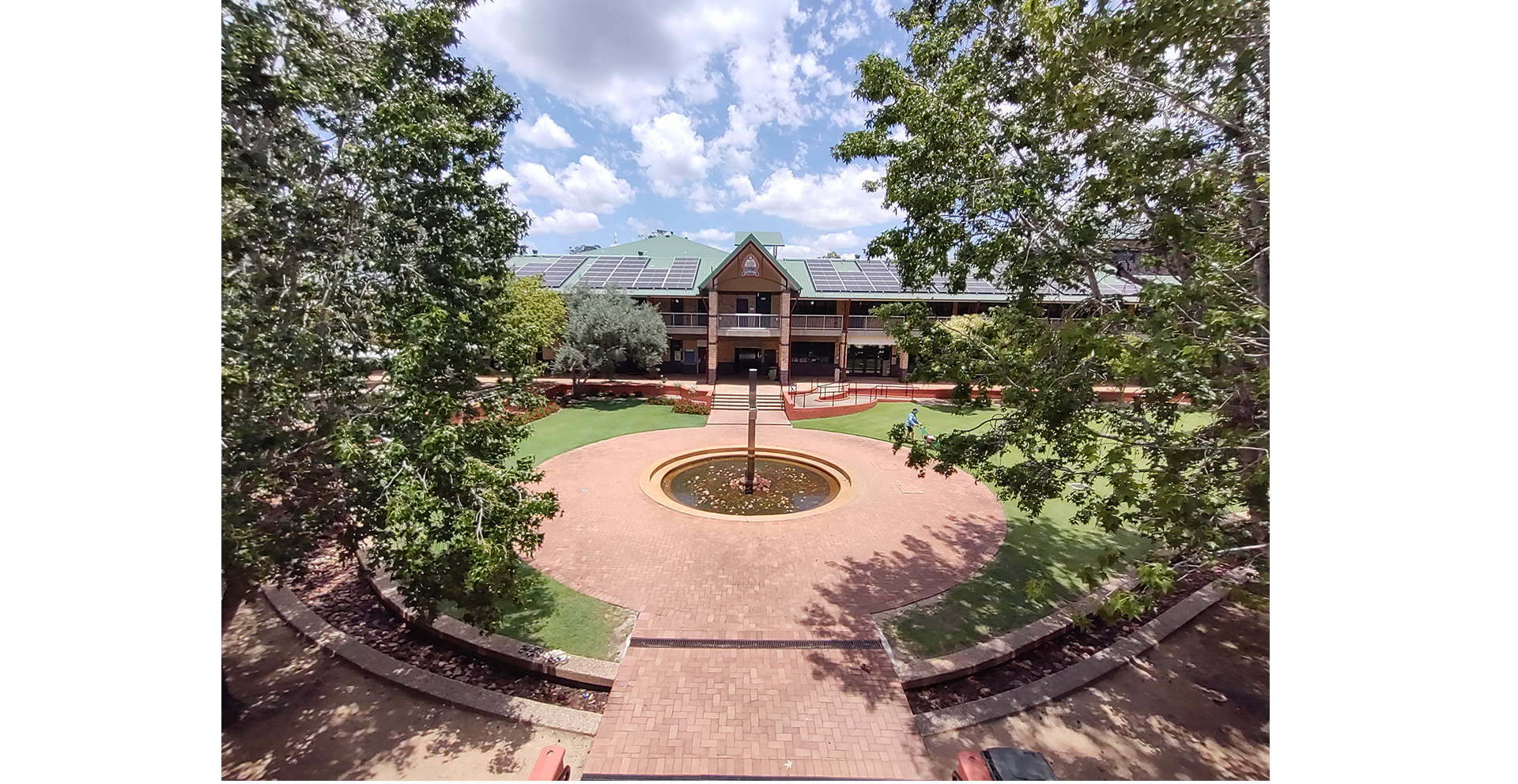
The school setting located in Brisbane, Australia where the research study was conducted. Photo: Wanjiru E Karanja, 2024
Pedagogical settings carry significant capacity to enable various health and wellbeing supports for young learners, whose situated spatial knowledge can meaningfully inform the understandings and design of educational environments. Inclusive Intergenerational Campus Environments (IICE) is a research study that seeks to explore how spatial practice can promote health, wellbeing and social belonging in shared intergenerational settings for adolescents and older adults. The aim is to develop an inclusive intergenerational model to benefit lifelong learning, health and social inclusion for older and younger generations. Framed as an exploratory “GrandSchools” model, the spaces generated are intended to be sites and catalysts for intergenerational learning, innovation, production and exchange (Trotter et al. 2022). In pursuit of this, the research asks “How can we create intergenerational learning and living settings that benefit health, wellbeing and social belonging for older adults and adolescents?” The work is being investigated via an architectural lens and aims to explore how to create spatial processes that aid the creation intergenerational high school and senior living campus environments. The study is ongoing and takes place in Brisbane, Australia.
Within this broader agenda, this paper focuses on the views and experiences of student participants by investigating how current learning environments support their physical health, mental wellbeing and social belonging. This paper describes how Photovoice, a participant-focused qualitative method has been applied in order to interrogate the built environment from young users’ perspectives. This method aims to cultivate student engagement with the built environment while attempting to see the world through the lens of the young participants. The data collected to date has generated spatial mappings of the school’s ‘health, wellbeing and social places’, and creates a meaningful layer of new information concerned with how a school’s physical environment supports or impedes student physical, mental and social health.
When health and wellbeing is prioritized in school settings, the research indicates that there are potential improvements in academic achievement, student attendance, and school retention (Griebler et al. 2017). In 1948, the World Health Organisation (WHO) articulated three key dimensions of health as physical, mental, and social, stating that “Health is a state of complete physical, mental and social wellbeing, and not merely the absence of disease or infirmity” (World Health Organization 1946). The research adopts this holistic conceptualisation of health to examine spatial supports of adolescent health and wellbeing within school environments. In this demographic, high levels of wellbeing serve as a key psychological strength linked to a broad range of emotional health and social functioning indicators (Carrillo et al. 2021), yet globally one in seven adolescents aged 10–19 experiences a mental disorder (World Health Organization 2021). Though the built environment plays a critical role in overall adolescent wellbeing the research suggests that various environmental characteristics can either facilitate or hinder these benefits. Holistic adolescent health is shaped by everyday environments through physical activity, mental wellbeing, and social interaction (Inchley, Currie, et al. 2018).
The research is grounded in Henri Lefebvre’s theory of spatial production (1974) which provides a critical framework for examining the social, experiential, and physical dimensions of place (Pierce and Martin 2015). Lefebvre conceptualized space as a product of social actions and spatial practices, asserting that social relations both shape and are shaped by spatial arrangements (Lefebvre 2014). This perspective challenges conventional notions of space as merely a backdrop for human activity, instead presenting it as a social product, an evolving, dynamic outcome of material, conceptual and social forces. His spatial triad conceptualizes space as socially produced in three dimensions: (1) perceived space (the material, physical dimension), (2) conceived space (spatial practice and practices) and (3) lived space (social environments where social exchange occurs). This thinking foregrounds the mechanisms and processes through which spatial environments can be produced, and establishes the study’s conceptual foundation for investigating the formative processes that can inform or guide the design of intergenerational settings. By applying Lefebvre’s insights, this study interrogates the social and physical dimensions of existing school sites, aiming to inform spatial practices that activate these domains to create shared, inclusive intergenerational environments.
To explore this socio-spatial dimension of a school environment from the perspective of its young occupants, the research developed a study: “Our Healthy Learning Spaces – My School, My Voice.” High school students in Brisbane, Australia were invited to look beyond the physical confines of school walls, windows and corridors to examine how their physical school environment supports their overall wellbeing. The research was able to foreground youth perspectives as central to the spatial production of pedagogical spaces through the use of Photovoice. Central to the inquiry was the use of Photovoice, a visual, qualitative method that requires participants to document and critique the physical spaces that shape their experiences of everyday life (Genoe and Dupuis 2013; Wang 1999). The study was conducted in accordance with ethical guidelines for research with minors and received approval from the Queensland University of Technology (QUT)’s ethics committee. A total of 23 high school students were recruited, allowing for an in-depth exploration of how built environments support or constrain student health, wellbeing, and social belonging.
The study was conducted over a four-week period in which students were tasked with capturing eight thematic photographs, each guided by a conceptual framework comprising five themes: active spaces, social spaces, wellbeing spaces, intergenerational spaces, and barriers within the built environment. In total, 160 photographs were generated, providing a rich spatial and visual dataset for analysis. These images, and their locations formed the basis for reflective discussions, enabling the research to identify which physical spaces are most valued by students and how these spaces contribute to their overall wellbeing. Beyond this thematic guidance, the activity was intentionally self-directed, affording participants the autonomy to choose where and how to take their photographs (Genoe and Dupuis 2013; Wang 1999). Following this, participants were invited to identify their photographed locations on a school map using colour-coded stickers through a mapping exercise. Upon completion, each group nominated a spokesperson to present their collective insights, enabling a broader dialogue on how the school environment supports or impedes student health benefits linked to physical, mental, and social wellbeing.
The Photovoice method produced four distinct maps that illustrate the holistic health-supporting spaces identified by students. Early analysis following a reflexive thematic approach (Braun and Clarke 2006) was conducted to examine the locations, use and significance of the themed spaces. Links and correlations between the spaces were also investigated to examine spatial overlaps, shared functions, spatial barriers and accessibility.
Preliminary results reveal that active spaces, as expected, naturally cluster around established fitness and sporting facilities like the gymnasium, volleyball courts and cricket nets. In contrast, social spaces emerge through everyday conversation, shared meals and play. To illustrate this, students photographed the music room, library, seating along the soccer field, and cafeteria. Regarding participants’ experiences of wellbeing, students nominated the library, cafeteria, music room and wellbeing office as spaces where they felt better, safe and secure. The students described these environments as important for relaxation or distraction mainly with friends, but at times alone. In relation to potential intergenerational zones (Kaplan et al. 2020) students envisioned the library, cafeteria, performing arts centre, and music room as key spaces for cross-generational interaction. Finally, under the “barriers” theme, several hindrances were highlighted including crowding, noise and restricted access. These were identified in locker rooms and the cafeteria (crowding and noise), courtyard (restricted access) and tennis courts (time restrictions).
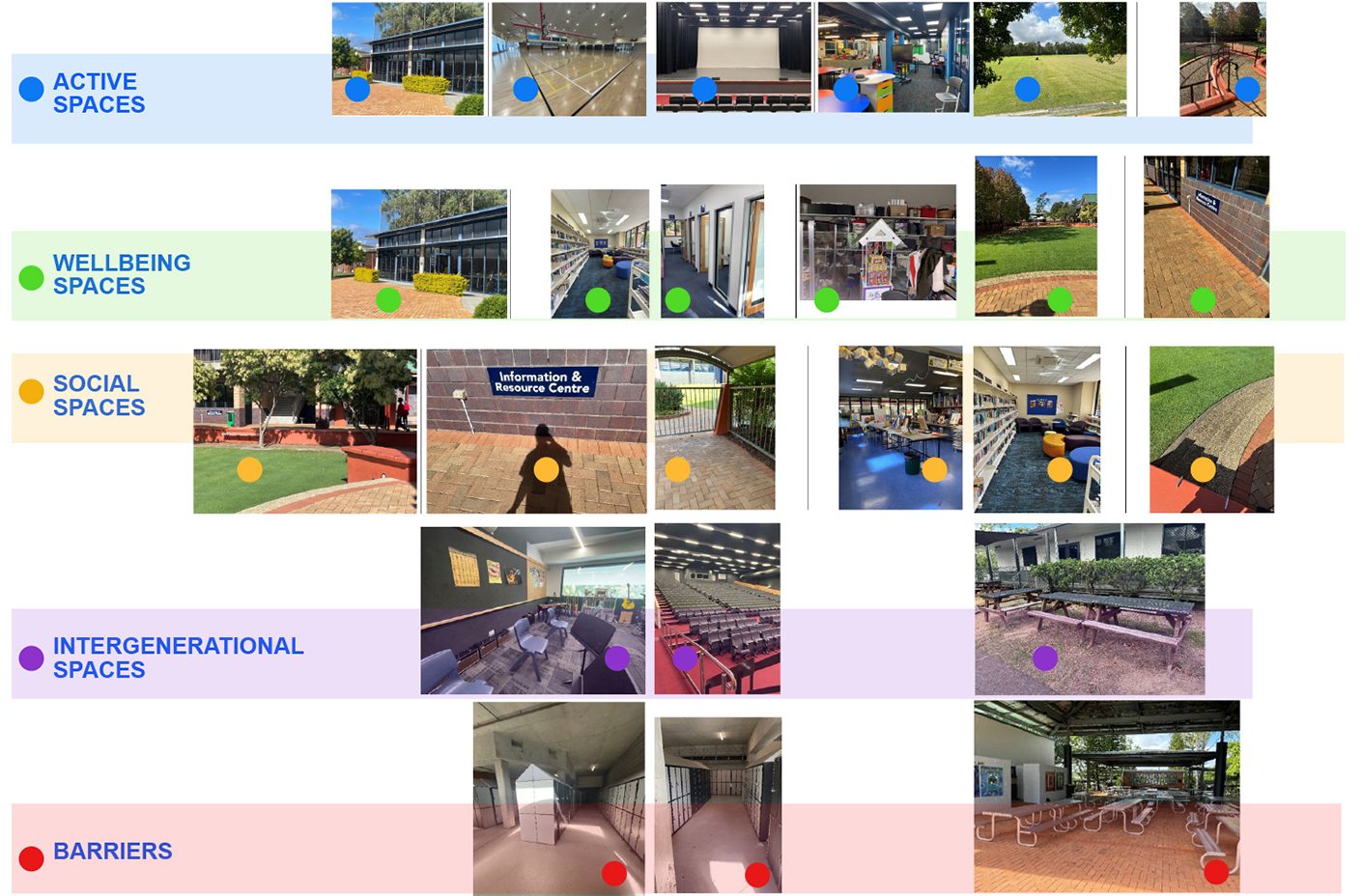
Analysis of favourite physical activity, wellbeing and social connection locations photographed by students. Images by Wanjiru E Karanja.
These early findings illustrate the specific, physical environments that support or impede health, wellbeing and social connection in adolescent learning environments. Collectively, this data indicates that certain key facilities can invite, facilitate and promote various forms of wellbeing, enabled through physical activity, experiencing wellbeing and social engagement. At the same time, physical barriers can limit use and engagement, potentially diminishing the benefits these spaces might otherwise afford. These insights inform how pedagogical settings can structure student opportunities for movement, connection, and wellbeing. The research is ongoing, with the next phase extending to senior residential sites.
By examining the meaning of space and how to produce it, Lefebvre argues that space cannot be understood through material form alone. The Photovoice approach offers a sound process which can be applied through a spatial lens to examine these dimensions. The result is student voices captured through photographs, narratives and mappings, thereby underscoring young people’s experiential connections to their everyday environments.
References
Braun, Virginia, and Victoria Clarke. 2006. “Using thematic analysis in psychology.” Qualitative research in psychology 3 (2):77-101.
Carrillo, Gisela, Jaime Alfaro, Carolina Aspillaga, Lorena Ramirez-Casas del Valle, Camila Inostroza, and Alejandra Villarroel. 2021. “Well-being from the understanding of children and adolescents: A qualitative metasynthesis.” Child Indicators Research 14 (4):1677-1701.
Genoe, M Rebecca, and Sherry L Dupuis. 2013. “Picturing Leisure: Using Photovoice to Understand the Experience of Leisure and Dementia.” Qualitative Report 18:21.
Griebler, Ursula, Daniela Rojatz, Venka Simovska, and Rudolf Forster. 2017. “Effects of student participation in school health promotion: a systematic review.” Health promotion international 32 (2):195-206.
Henri, Lefebvre, tanslated by Nicholson-Smith Donald. 1991. The production of space. Blackwell Publishers.
Inchley, Jo, Dorothy Currie, et al. 2018. Growing Up Unequal: HBSC 2016 Study (2013/14 Survey). Copenhagen: WHO Regional Office for Europe.
Kaplan, Matthew, Leng Leng Thang, Mariano Sánchez, and Jaco Hoffman. 2020. “Intergenerational contact zones.” Intergenerational contact zones: place-based strategies for promoting social inclusion and belonging. New York: Routledge.
Lefebvre, Henri. 2014. “The production of space (1991).” In The people, place, and space reader, 289-293. Routledge.
Pierce, Joseph, and Deborah G Martin. 2015. “Placing lefebvre.” Antipode 47 (5):1279-1299.
Trotter, Mark, Paul Sanders, Marissa Lindquist, Evonne Miller, Aso Hajirasouli, Andrea Blake, Rosamund Harrington, Heidi Olsen, Tanja Tyvimaa, and Gert‐Jan Pepping. 2022. “Intergenerational living and learning: The value and risks of co‐locating retirement villages on secondary school campuses–Evaluating the GrandSchools vision.” Australasian Journal on Ageing 41 (3):e305-e309.
Wang, Caroline C. 1999. “Photovoice: A participatory action research strategy applied to women’s health.” Journal of women’s health 8 (2):185-192.
World Health Organization. 1946. “Health is a state of complete physical, mental and social well-being and not merely the absence of disease or infirmity.” International Health Conference, New York.
World Health Organization. 2021. Promoting physical activity through schools: a toolkit. Geneva: World Health Organization.
“This is My Hammarkullen…”— Listening to Community Storytelling
Emilio Brandao
What is a true story? What does a story do? Whose narratives do we listen to in a story? These questions are highly relevant in the local context of Hammarkullen, a late-modernist housing area in northeast Gothenburg, Sweden, with a large immigrant community. The socio-cultural image of Hammarkullen is often shaped by external narratives of stigmatization (see Ericsson et al., 2002; Berggren, 2012), with the area perceived as neglected by politicians and other public authorities (researcher’s field notes from community meetings). Many concerns have been raised regarding the exclusion of residents—along with their stories and knowledges—in numerous processes for transforming the area, as expressed in a debate article by residents in 2023 (Danielsson et al. 2023), in news articles (Yousuf 2023a, 2023b), and in research output (Hansson 2018; Thörn, Bogdanova, et al. 2023; Thörn and Polanska 2023; Thörn, Sernhede, et al. 2023). At the same time, Hammarkullen is also known by the community’s engagement in complex practices and networks of local resilience (Antaki et al. 2026), including well-known cultural activities like the Hammarkullen Carnival (Wångersjö et al. 2016), and long-developed pedagogies focused on foundational societal values such as democracy and solidarity (Fryk 2016).
It is within this context that I became interested in working with stories owned and told by members of the Hammarkullen community about their area, how they raise questions about significance, truth, and power in stories, and whose stories we often fail to listen to. This work explores how, through collecting and archiving residents’ narratives (a.k.a. oral history, Abrams, 2016) communities can find empowering experiences, strengthen their voices, and foster engagement in societal questions. This paper introduces a pedagogical framework for working with and sharing personal and autobiographical stories of community life and history, presenting a course at a civic education institution in Hammarkullen where participants engage with their life stories, and turn them into audiovisual narratives. Based on empirical experience, learning is guided collectively by participants—understood as a collaborative group of teachers and students—inspired by Paulo Freire’s (1972) ideas. This involves continuously adapting content, assignments, and priorities. Learning is thus seen as a collectively constructed process of becoming, shaping both what is learned and how it is learned.
Prior to this project, in 2020, together with Daniel Brandão—a scholar in participatory community video and multimedia art (Brandão 2014)—we created a method for architecture students to collaboratively analyse their project sites and the respective spatial, socio-cultural, and historical situations, through the collection of oral and visual accounts, as well as diverse soundscapes, from everyday community life and other experienced realities. Each year, students produce short videos depicting contextualized stories and socio-spatial challenges learned from residents and other stakeholders. Over a couple of intensive days of fieldwork involving interviews, observations, enactments, workshops, and other qualitative mapping techniques, all recorded in audio and film, and later edited into short and interpretative narrative-documentaries that follow a designed script and focus on meaning-making. One film for each project context would also implicitly or explicitly identify and represent the project’s main issues and stakes to be worked further on in each respective studio project. Termed “audiovisual narratives,” this approach highlights the value of representing community stories through audiovisual media, (Image 1) and early on, the method drew local interest, prompting deeper engagement in collective storytelling of these urban contexts.
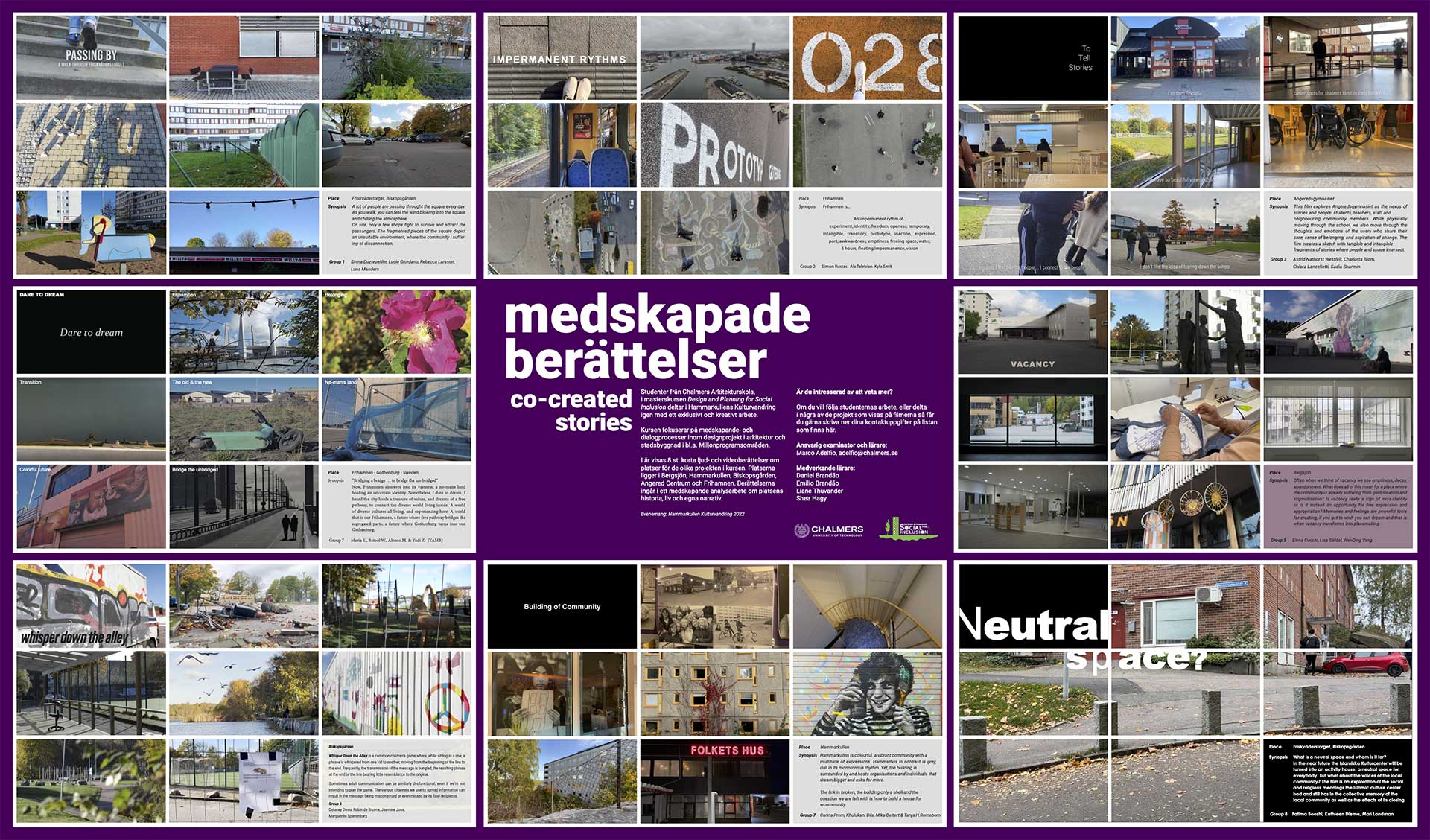
Image 1: Composition of still-images from 8 videos produced by students in the workshop Audiovisual Narratives, Social Inclusion studio, October 2022. Image composition: Emilio Brandao
The audiovisual method was further developed in my ongoing PhD—a community-based participatory action research project exploring ways of working with communities’ stories and their societal impact. In Autumn 2023, in collaboration with Hammarkullen Kulturvandring (the autumn cultural festival), Daniel and I organized a workshop for residents involved in cultural production for the annual three-day Summer Carnival. Participants used video-documentary to share their stories about the Carnival beyond the event, highlighting its year-round significance and presence. These narratives showcased community groups’ preparations, including creating and maintaining cultural artefacts and dances. At the videos’ premiere screening during the festival on the 14th October (Image 2) both the participants and the audience expressed interest in continuing to use these tools for storytelling about local community life within an educational setting.
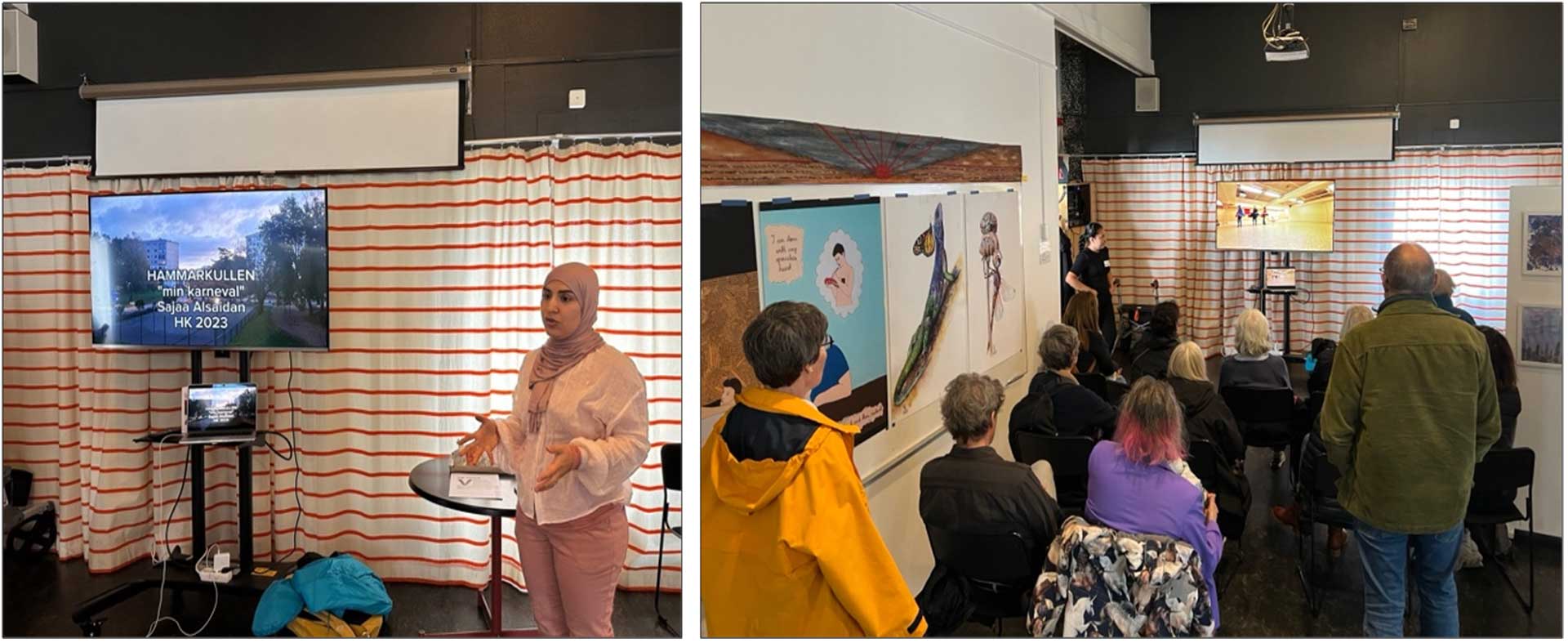
Image 2: Presentations of the videos at the Culture Walk festival on 14/10 2023. Photos: Emilio Brandao
Angereds Folkhögskola* has played an important educational role in Hammarkullen for many years. With most participants being local residents, this folk high school—located in the heart of the area—has become a key reference in local civic education. In the spring of 2024, a collaboration with Angered Folkhögskola was established to develop “audiovisual narratives” as a community-based educational methodology for storytelling. We created the course Detta är Mitt Hammarkullen — en filmisk berättelse (This is My Hammarkullen — a Film Story), where participants produced autobiographical films about their life journeys as part of Hammarkullen’s community story. Together with the school’s principal, and Lasse Fryk—educator, former social worker, and expert in civic pedagogies and community building—we designed a pilot program for autumn/winter 2024 (August–January). The initiative was a collaboration between Angered Folkhögskola, KTH School of Architecture (my research project), and Universidade do Minho in Portugal (through Daniel as “method designer”). Recruitment targeted local community members, with no participation fee, and six people enrolled.
The course’s planned structure included five three-hour evening sessions over four months, plus two to three individual supervision meetings focused on each participant’s film-story project. This paper focuses on the first two sessions and reflects on how working with personal community narratives impacted my own research learning process.
The pedagogical sequence intended to begin with a quick discussion on the importance of personal life narratives that connect with collective local experiences, then we would move toward producing individual films about personal perspectives of Hammarkullen as part of participants’ lives and societal views. However, from the start, the course structure became rather flexible, allowing content to develop through the experienced process and pace of the learning exchange between participants. This approach follows the idea of pedagogy as a mutual process between teachers and students, mediated by the world and its “cognizable subjects and objects” (as the components of each personal story), all owned by the participants (Freire 1972).
In the first course session we used threads, sticks, and word tags to explore an embodied discussion of the concept “livslinje” (life-timeline), a workshop model developed by Lasse Fryk (Image 3). This model links the “self” in autobiographical narratives to social relations (family, friends) and spatial relations (places, tools, environment)—interpreted here as Freire’s “cognizable objects.” A life narrative roots the self in personal history, experience, and knowledge, while shaped by self-image, values, vision, and desire.
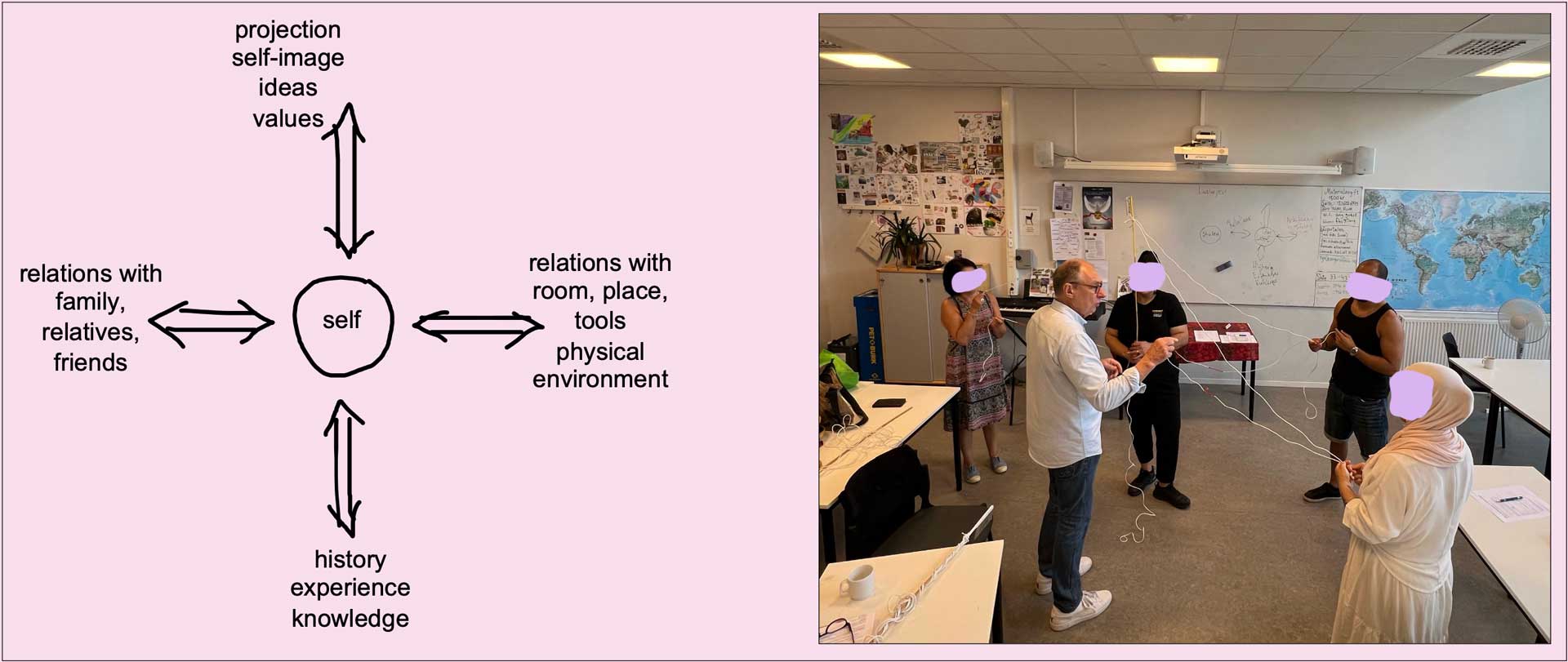
Image 3: Representation of a diagram drawn by the schoolteacher and workshop during the course’s first session (2024.08.24). Photo: Emilio Brandao
Reflections by course participants at the end of the first session revealed that the workshop had a “therapeutical effect,” as one participant expressed it; “a part of what you show here [in the life-timeline workshop] is a part of a healing process.” Other reflections showed the desire to create meaningful and inspiring material; “I want to do a good film to inspire others. I want to show [in the film] my son, my neighbours… I want to become proud about my film. [to tell] ‘I am important in Hammarkullen.’”
The second session was initially planned as a workshop to create a first storyline for the participants’ films but instead became a long, powerful storytelling session. After preparing and sharing food, everyone sat in a semi-circle (Image 4). Each participant took turns sitting in the middle to share a story—their personal relation to Hammarkullen as a place and community. At first, I wondered if these stories would be directly used in their films but soon realized there was no urgency to decide what to include. The learning process, through individual storytelling and collective “storylistening” (see e.g. Lipari 2010; Dillon and Craig 2021), became the course’s pedagogical priority beyond the films as main output. The work with the storylines could wait.
This session gained important depth, with each story taking longer than expected. Even I was invited to share my personal story of Hammarkullen. The participants shared personal, emotional narratives that sparked conversations and mutual engagement rooted in collective care and recognition in every story, despite a wide diversity of the narratives.
These stories included diaspora, fleeing danger and conflict elsewhere, facing racism in Sweden, and complex life struggles—the type of local narratives we know to be common beyond this group. All these narratives share a journey toward finding place in Hammarkullen—a home, a “safe” home, a cultural and social home, and for some, the only home with such meaning. And I was left wondering if the second session confirmed the course as a collective and spatial healing process, inspired by one of the above mentioned quotes at the end of the first session, now accepted as an outcome of the course.
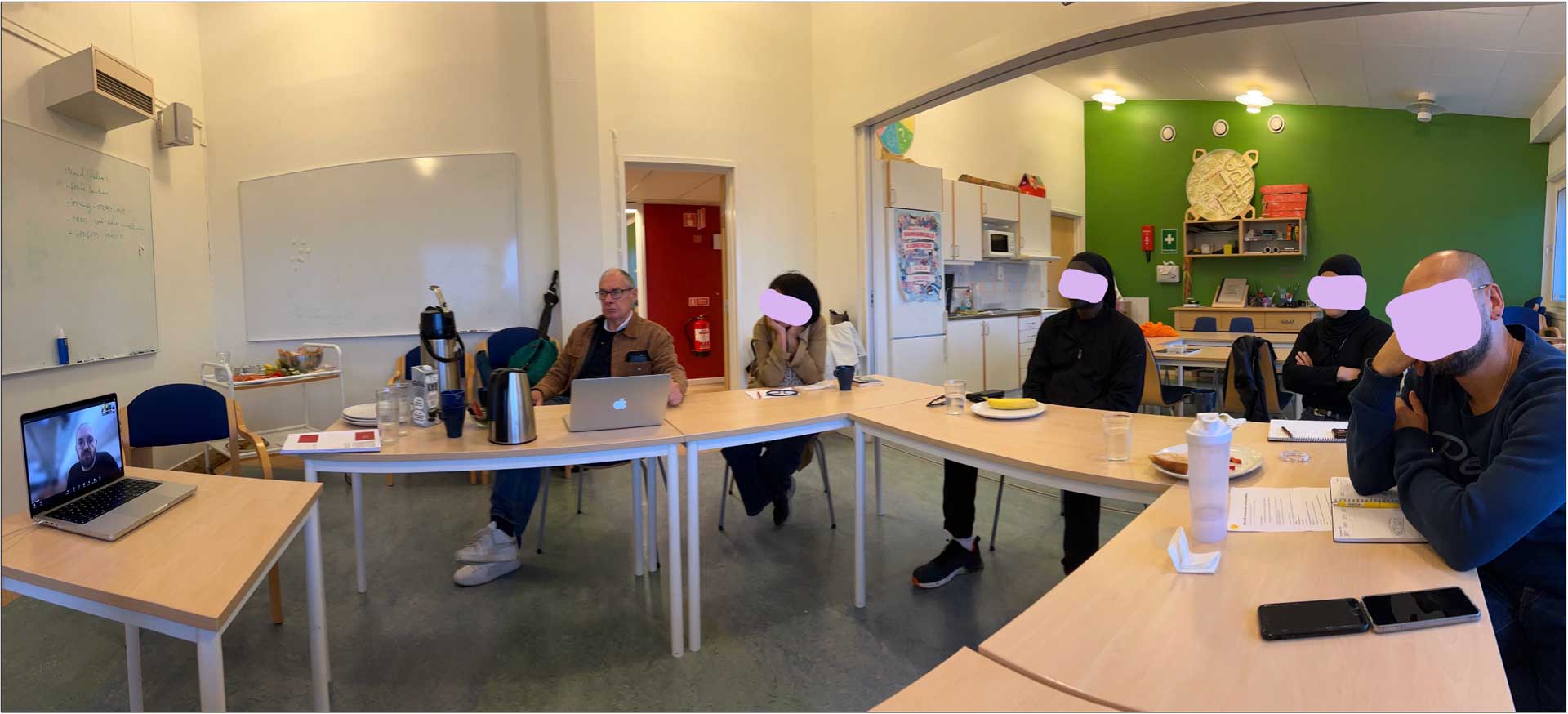
Image 4: Photo from session 2 (2024.09.24): Meeting with the “method designer”. Photo: Emilio Brandao
This paper tells the beginning of a story about a pedagogical project that listened to individual narratives and experiences of community in Hammarkullen. The project was a course at a folk high school, with the expected output being short autobiographical film-narratives, however the story shared here hints at a larger process that goes beyond the course, as the pedagogy of community storytelling invites reflection on the temporality of this type of work. The learning process—involving collaborative telling and listening—neither started nor is expected to finish within this course’s framework. For my research, this suggests a shift in developing local pedagogy for community storytelling, beyond curricular design and tangible outputs. Such pedagogy may be located within the stories themselves, serving as tools to re-centre communities’ knowledge and agency over the narratives about their neighbourhoods.
* Folkhögskolor, or “folk high schools,” are educational institutions promoting lifelong learning, social inclusion, and democratic values. Founded in the 19th century, they provide accessible education for adults, especially from working-class and rural communities. Beyond academics, they offer courses in practical skills and arts to foster civic engagement, personal growth, and integration of marginalized groups, including immigrants.
References
Abrams, Lynn. 2016. Oral History Theory. Routledge.
Antaki, Nicola, Doina Petrescu, Meike Schalk, Emilio Brandao, Daniela Calciu, and Vera Marin. 2026. ‘Mediation Roles and Ecologies within Resilience-Focused Urban Living Labs’. Buildings and Cities 7 (1): 20–38. https://doi.org/10.5334/bc.608.
Berggren, Karin. 2012. ‘Stories, Images and Architectures – Real and Fictional Accounts of the Fabrication of the Swedish Suburbs’. Master Thesis, Chalmers University of Technology. https://hdl.handle.net/20.500.12380/158262.
Brandão, Daniel. 2014. Museum of Ransom: Towards a System for the Aggregation and Interpretation of Contemporary Participatory Video as Contextual Cultural Heritage. PhD dissertation at University of Porto, Portugal. https://hdl.handle.net/10216/75071.
Danielsson, Renée, Kina Thorsell, Ebba Hermelin, and Ola Terlegård. 2023. ‘Låt Inte Vinstdrivande Bostadsbolag Få Makten Över Hammarkullen (Don’t Let for-Profit Housing Companies Gain Power over Hammarkullen, Own Translation)’. Göteborgs-Posten (Gothenburg), March 13.
Dillon, Sarah, and Claire Craig. 2021. Storylistening: Narrative Evidence and Public Reasoning. Routledge.
Ericsson, Urban, Irene Molina, and Per-Markku Ristilammi. 2002. Miljonprogram Och Media: Föreställningar Om Människor Och Förorter. Integrationsverket & Riksantikvarieämbetet. http://urn.kb.se/resolve?urn=urn:nbn:se:uu:diva-41892.
Freire, Paulo. 1972. Pedagogy of the Oppressed. Penguin books.
Fryk, Lasse. 2016. ‘Hammarkullepedagogiken-En Omgestaltande Resa’. Haraldsson SM (Red.). Värdegrund Och Mångkultur i Handling-i Förskola, Skola Och Andra Pedagogiska Verksamheter, 94–123.
Hansson, Stina. 2018. Tillitens roll i områdesutveckling, en studie av Hammarkullesatsningen. SDF Angered/Institutionen för Globala Studier, Göteborgs Universitet.
Lipari, Lisbeth. 2010. ‘Listening, Thinking, Being’. Communication Theory 20 (3): 348–62. https://doi.org/10.1111/j.1468-2885.2010.01366.x.
Thörn, Håkan, Elena Bogdanova, Dominika V. Polanska, and Linda Soneryd. 2023. Standardhöjning Eller Underhåll?: Deltagande Och Hållbarhet i Renoveringar Av Hyresbostäder. Stockholms centrum för forskning om offentlig sektor, Stockholms universitet. https://www.score.su.se/publikationer/scores-rapportserie/2023/ny-score-rapport-1.644856.
Thörn, Håkan, and Dominika V. Polanska. 2023. ‘Responsibilizing Renovation: Governing Strategies and Resistance in the Context of the Transformation of Swedish Housing Policy’. City 27 (1–2): 209–31. https://doi.org/10.1080/13604813.2023.2170694.
Thörn, Håkan, Ove Sernhede, and Hans Lindgren. 2023. ‘Ansvarets politik: Kommunledd gentrifiering och hyresgästorganisering’. Sociologisk Forskning 60 (1): 57–81. https://doi.org/10.37062/sf.60.24784.
Wångersjö, Maria, Ragnar Lång, and Stefan Persson W. 2016. Hammarkullekarnevalen : De Första 40 Åren. Hammarkullekarnevalen och ABF Göteborg.
Yousuf, Etezaz. 2023a. ‘De Känner Oro För Gentrifiering Och Chockhyror (They Worry about Gentrification and Shock Rents, Own Translation)’. Göteborgs-Posten (Gothenburg), March 29.
Yousuf, Etezaz. 2023b. ‘Satsningen På Utsatta Områden Får Expertkritik (The Investment in Vulnerable Areas Receives Criticism from Expert, Own Translation)’. Göteborgs-Posten (Gothenburg), February 27.
Re- / Non- Reading Fragments: Inventories for Architectural Thinking
Sezin Sarıca
This on-going research stems from the acts of “re-reading” and “non-reading” in three different pedagogical experiences that use non-conventional media. Here, re-reading involves the critical reinterpretation of architectural and cultural fragments, while non-reading encourages an intuitive, open-ended engagement with these fragments. These acts draw on concepts from nineteenth-century German architectural theory and aesthetic philosophy, which produced enduring concepts such as Vorbilderbewegung (modelling movement) and Nachzeichnen (re-drawing). This study is motivated by nineteenth-century methodologies of reading fragments, grounded in the premise that architectural history bears a wealth of making methods capable of fostering creativity and drawing skills, while simultaneously offering innovative ways of interpreting theory particularly within design studios.
Building on this theoretical framework, these concepts can be reclaimed and reinterpreted to explore non-conventional modes of architectural thinking and representation. The creative inputs, consisting of not only architectural elements but also textual, artistic, social, everyday, and leftover fragments, are re-read and non-read, becoming essential components in these explorations. To clarify how these conceptual operations are structured and translated into making, the text is organized in two interrelated parts. The first part briefly opens up a few theoretical fragments – mentioned above – as intellectual inputs that construct the conceptual base for the pedagogical experiments. It begins with Vorbilderbewegung (Modelling Movement) to establish the nineteenth-century context, and then discusses specific acts and terms that emerged within this framework and can be re-operationalized within contemporary design knowledge: Nachzeichnen (re-drawing), Nacherleben (re-experiencing), non-reading (Nichtlesen), re-reading (double reading), and the multiple meanings of Form in the nineteenth century. These theoretical fragments function as conceptual inputs for the second part, which presents three pedagogical experiments. The first two – Project Leftovers and Tracing-Tracks – are workshops conducted with students, while the third is an individual drawing research. Project Leftovers is a two-day workshop organized by me and İlkyaz Sarımehmetoğlu as part of the 46th National Architectural Students Gathering (2023). The workshop focuses on collecting fragments of design leftovers in order to construct new inventories for design thinking. The second workshop was organized within the scope of Arch 291 Landscape Design at the METU Department of Architecture (2022), conducted by Funda Baş Bütüner, Gizem Deniz Güneri, me, Gülnur Güler, and Ece Yoltay. Designed together with Bütüner and Güneri, the workshop invited second-year architecture students to design through open-ended processes of collecting and re-reading landscape fragments. The final example, distinct from the first two, is an individual drawing research developed for Associate Professor Dr. Esin Kömez’s graduate course “City in Contemporary Architectural Theory” at METU Department of Architecture (2020). The drawing research is based on an imaginary cityscape collection derived from a cloud inventory.
The renowned concept of the “fragment” opens up creative possibilities beyond fixed limits (Vesely 2006, 337) In this paper, the concept functions as both an input and a tool to structure the text, guiding the exploration of ideas. Nineteenth-century modern epistemology, with its emphasis on being “open-ended and heterogeneous,” underlines architecture as a dynamic process of becoming and making. (Schwarzer 1995)
Vorbilderbewegung (Modelling movement)
The nineteenth century generated many recurring concepts, such as Vorbilderbewegung, which is a movement including not only model collections but also pattern books, with detailed drawings of historical prototypes of art, industry, and architectural ornaments, and from which models of the prototypes were produced, collected, and became a part of the creative processes. The concept was seen as a “mediator between formal invention and standardization.” (Curtis 1996, 100) The movement gave rise to the publications of Formlehre (coded lexicons) and Lehrbücher (illustrated pattern books), as well as teaching collections as working spaces (Wolf 1996, 17). These collections consisted of publications, original drawings, and plaster casts or cork models, to re-document classical forms, bridging historical knowledge with architectural education.
Nachzeichnen (re-drawing) and Nacherleben (re-experiencing)
The teaching collections were spaces for Nachzeichnen (redrawing), a renowned drawing method used to teach students classical forms through replication. These collections housed various architectural fragments and provided drawing rooms where students could practice their “copying” skills. Another method – introduced by the Debschitz School – during the century was Nacherleben (re-experiencing), which did not involve copying but rather an act of interpretative drawing (Çelik Alexander 2018, 141). These two acts can foster different creativities and media in terms of design knowledge.
Form
Form in the nineteenth century encompassed a variety of sub-definitions that provided a generative foundation for architectural theory. As Mallgrave and Ikonomou state, contrary to conventions, architectural theories were highly influential for philosophers during this period (Ikonomou and Mallgrave 2000, 3). These theories influenced thinkers such as Conrad Fiedler, Adolf Hildebrand, and Adolf Göller, and Heinrich Wölfflin. Their explorations present dual strands of concepts based on the definition of form, such as: perceptual versus conceptual experience, visual and kinesthetic perception, inherent form versus effective form, and distant and near view. (Ikonomou and Mallgrave 2000) The dual definitions share a similar reference system, where one “is primarily rooted in visual experience, and the other emerges through abstraction, relying on the conceptual organization of perceptual data.” (Ikonomou and Mallgrave 2000, 32) Taken together, these dual strands suggest that form operates through a multidimensional structure that expands design methods by encouraging a double mode of engagement: one grounded in changing sensory experience and the other in an interpretive, abstract construction.
Non-reading (Nichtlesen)
Non-reading (Nichtlesen) is defined as “a peculiar kind of reading in the early twentieth century, which is an activity for a subject suspended precariously between education and illiteracy.” (Çelik Alexander 2018, 72) A non-reader was affected by the doubles of the late-century selfhood models: by hermeneutic techniques and mechanistic self-composed or disparate sensations (Çelik Alexander 2018, 72). Influenced by Wölfflin’s method of comparative viewing, which involves reading each image individually while also understanding their relationships as a whole, the non-reader engaged with images in a way distinct from both the nineteenth-century hermeneut and the twentieth-century scanner (Çelik Alexander 2018, 87). Similarly, Anton Ehrenzweig’s distinction between two types of vision can be connected to “non-reading”. Ehrenzweig identified “conscious planning,” a clear and precise visualization, and “unconscious scanning,” an imprecise, intuitive form of seeing. He argued that creativity is inherently tied to the chaos of the “scanning”, where intuitive and scattered perception play a vital role in artistic production. (Çelik Alexander 2020, 92; Ehrenzweig 2000, 5) The act of non-reading, therefore, can be understood as an operative mode of engaging fragments.
Re-reading (double reading)
The act of re-reading can be defined through Derrida’s theory of deconstruction, which has two levels. According to Derrida, “double reading” is a deconstructive process. The first reading is a reproductive reading, in which the text has a determinate meaning that is shared with common readers. The second reading is a critical and productive reading, which includes an active interpretation that disseminates the meanings that the first reading has already constructed. (Kakoliris 2004, 283) Thus, re-reading can operate as a methodological tool that enables interpretation and, thus, generative material within architectural thinking.
The aforementioned theoretical inputs operate through the concept of the “fragment,” which finds its historical precedents in nineteenth-century teaching collections and coded lexicons. These theoretical fragments serve as conceptual foundations for the pedagogical experiments discussed here. The common methodological thread underlying all three is the act of collecting and inventory-making.
As noted in the introduction, although each experiment is grounded in the potentials of collecting and making inventories, they differ in context, scale, and mode of engagement. All three can be understood as extensions of my PhD research, which investigates modes of creative making and their related historical frameworks and spatial contexts. At the same time, these workshops and the drawing research emerged within, and were shaped by, the specific communities with which I engaged during this research period. The first workshop addressed a broad community of architecture students from across Turkey; the second focused on the second-year architecture students within a landscape design studio setting; and the third represents an individual methodological exploration, developed through my position as a doctoral researcher within a graduate seminar. Together, these three experiments demonstrate how the theoretical framework of fragments, re-reading, and non-reading can be translated into distinct pedagogical and representational practices.
The first experience is a workshop: “project leftovers”, a two-day workshop organized by me and İlkyaz Sarımehmetoğlu as part of the 46th National Architectural Students Gathering (2023). The workshop focuses on the existing physical/digital leftovers “junk” of the processes of design/production. These leftovers, as well as pages from historical books, exhibitions, and artworks, are collected to create a multi-media archive/repository. The aim of the workshop is to conduct uncertain, informal, and uncanny design experiments by re-reading and non-reading the leftovers to create inventories in mixed media (folders, models, performances).
As a preliminary study for the workshop, physical/digital junks-leftovers and traces from studio works of METU Department of Architecture students are collected. Workshop participants are also encouraged to bring their own physical/digital leftovers (Figure 1). Before the hands-on workshop, we begin with a few warm-up presentations, showing examples, fragments of keywords, images, and artworks. After this, by scanning, non-reading, or re-reading the leftover-repository, the participants create an inventory. They then propose ways to re-design the relationships between the fragments in their inventories. (Figure 2).
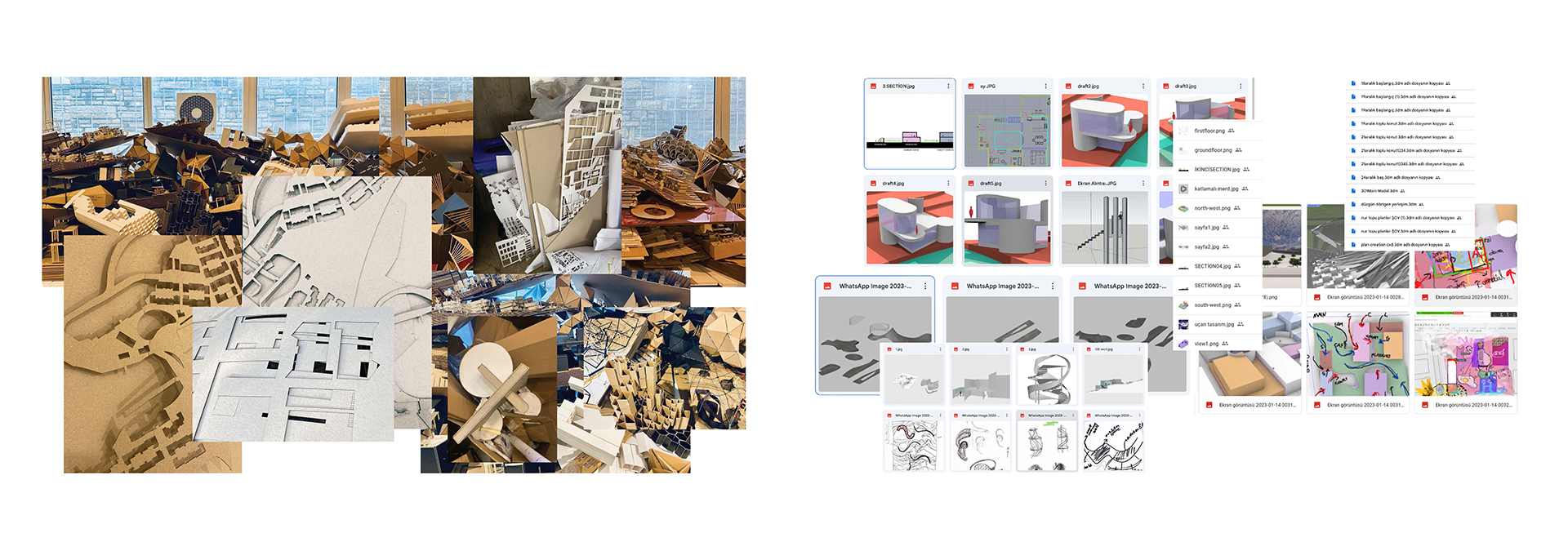
Figure 1. Physical and digital leftovers from the “project leftovers” workshop. Photos and screenshot: Sezin Sarıca
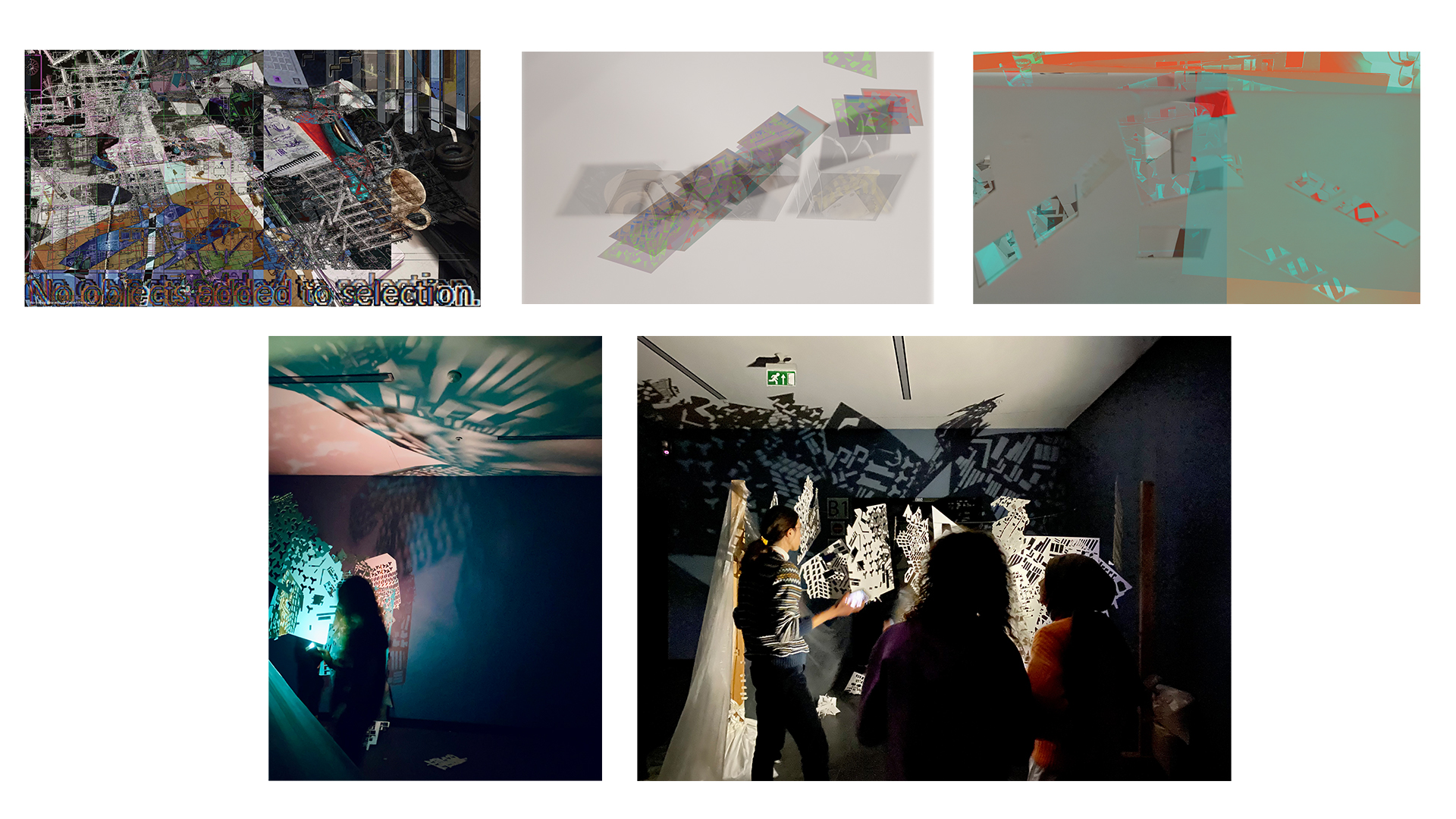
Figure 2. Top left: Workshop work with digital imaging, by Atakan Harmancı. Middle and right: Workshop work, a camera exercise with photographs of the leftovers, by Seray Ulusoy. Bottom: Workshop work, a performative space with light and bodies, by Oktay Kanbur, Elif Akdoğan, Yasemin Şahinbaş, Caner Ceylan, Berre Su Can, Melike Aydın, Batuhan Yakıcı. Photos: Sezin Sarıca
The second experience is the workshop that was designed within the scope of ARCH 291 Landscape Design at the METU Department of Architecture (2022), by Funda Baş Bütüner, Gizem Deniz Güneri, and me. The workshop “Tracing-tracks: A Walk Made by Collecting and Thinking” focuses on site re-reading. The site is METU Campus, which is a significant project of modernity. (Savaş et al. 2020). The workshop suggests a kinesthetic experience with the act of collecting fragments from the campus. Accordingly, we ask students to develop an experiential inventory that shifts the limits of built and natural environments. In the inventories, students present an extensive selection of fragments – vegetation, buildings, art objects, designed/non-designed landscapes, textures, frames, views, scales, etc.
Submitted works for this exercise have emphasis on various concepts and operations but mainly present two main tendencies in their inventory-making processes. One group of examples prioritizes the spatiality of the track and the act of tracing relations of fragments within the landscape, while the other focuses on the specifics of the fragments collected within the landscape. Both tendencies expose different sets of inventories for re-reading the campus landscape that result in different representation techniques (Figure 3).
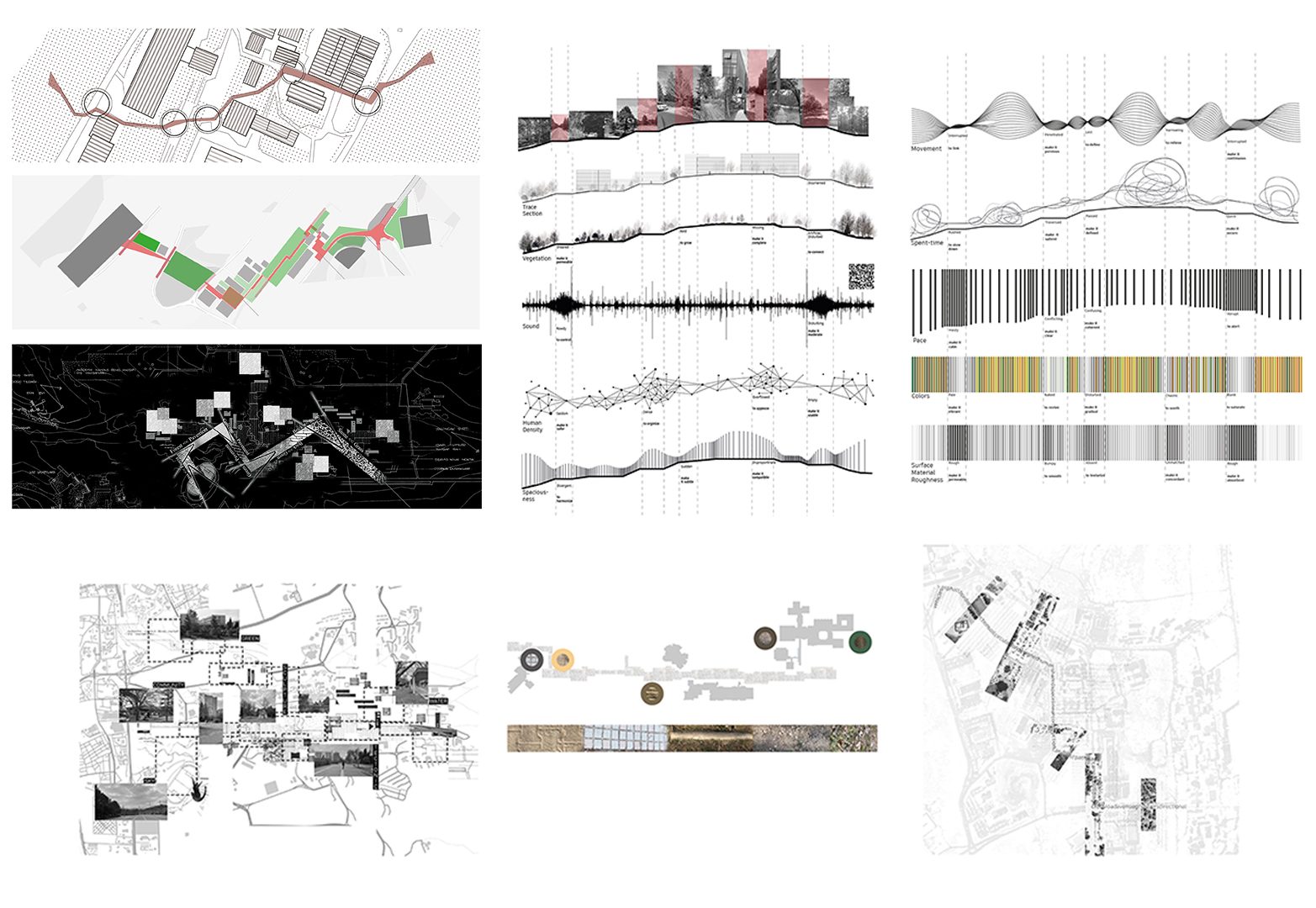
Figure 3. Arch 291 Landscape Design students’ submissions in 2022 for Trace-Tracks: A Walk Made by Collecting and Thinking assignment. Works by Y. Aktuğ, İ. Arslantürk, R. Bozkurt, B. E. Dereli, A. K. Dinç, İ. N. Durukan, K. Güven, G. Gökal, O. İmamoğlu, Ü. Karakaş, Z. M. Koçak, B. Küçükkulahlı, M. Goldasteh, L. Türker, T. Bulut, T. Gönenç, D. Ünal, E. Yumurtacı, M. Akaoğlu, S. Yıldırım, S. Ozan, E. Öneç
This drawing research, distinct from the previous workshops, as an individual and speculative exploration, is a fictional drawing inventory composed of urban fragments in a cloud-database. Referring to instauratio urbis, the drawing represents an analog screenshot of visual data fragments stored in the cloud-database, which become visible on different screens. “Poly.vers.orama” emerges from the redefinition of existing representational terms. Referring to the technique of the diorama, which re-created cityscapes in earlier centuries, the drawing reconstructs the relationship between 2D and 3D and proposes a “poly.vers.orama” (poly–plural, vers–reversed, –orama–view). The project results from a juxtaposition of different historical and contemporary subjects and media within architectural discourse.
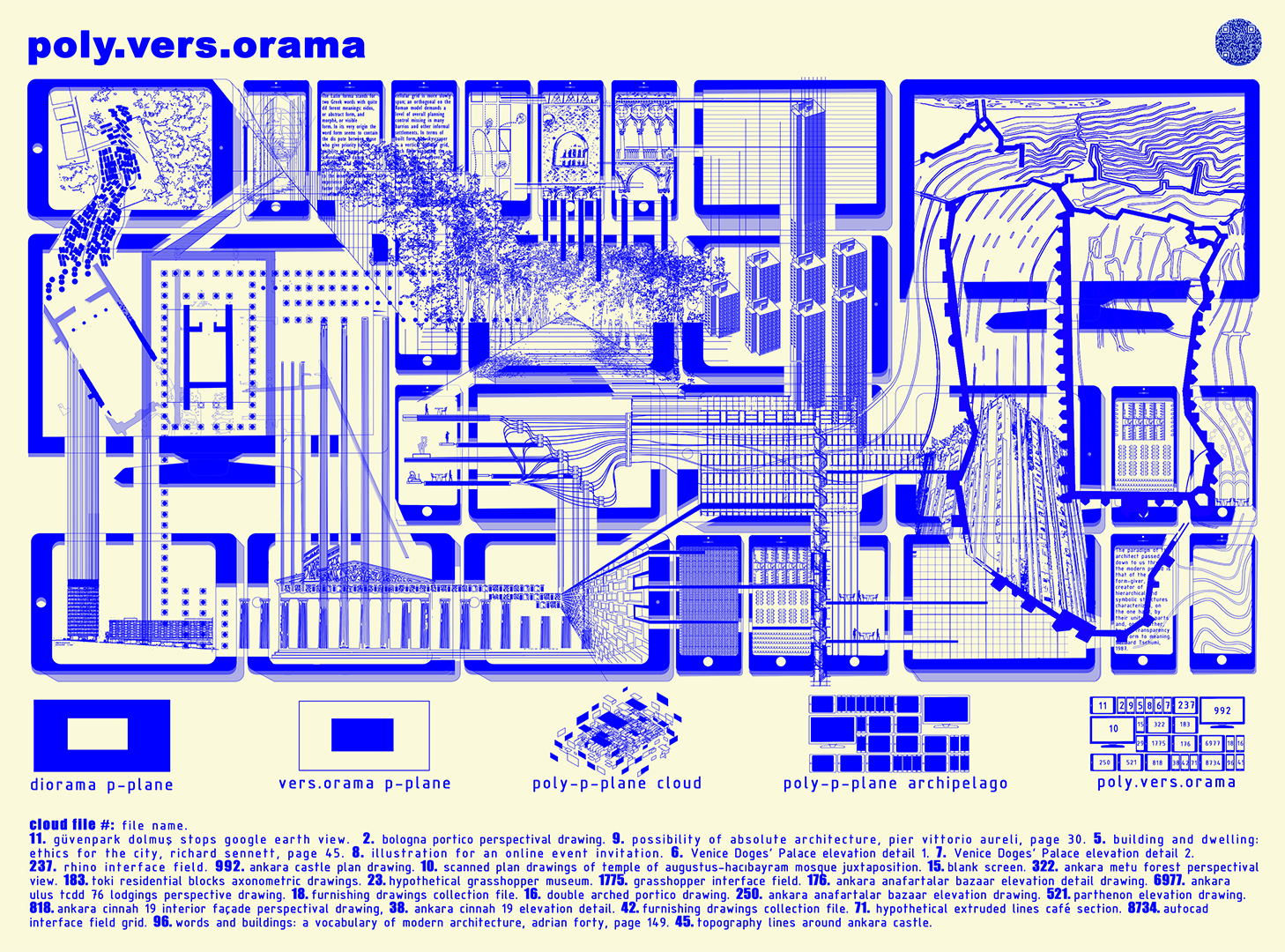
Figure 4. poly.vers.orama, diagrams and inventory process, created by Sezin Sarıca
This essay argues for the relevance of the concepts from nineteenth-century German architectural theory and aesthetic philosophy within contemporary pedagogical practices. By re-understanding fragments and inventories within architectural thinking, it is encouraged to engage with architecture as an open-ended process that embraces creative experimentation. The essay presents personal research and making experiences that reflect each other. Thus, conventional modes of representation are challenged, relating architectural form, history, and everyday objects in new and imaginative ways.
Acknowledgments
I would like to thank my PhD advisor, Ayşen Savaş, for her guidance throughout the development of my doctoral research, which has also informed the focus of this study. I would like to thank Funda Baş Bütüner and Gizem Deniz Güneri for our collaboration in the ARCH 291 course; a paper emerging from this workshop is currently under review. I am also thankful to Esin Kömez, whose graduate course encouraged me to develop the individual drawing research. I am also grateful to İlkyaz Sarımehmetoğlu, the co-designer of the Project Leftovers workshop, with whom I continue to collaborate and produce new work. Finally, I would like to thank all the students who participated in these workshops and contributed to the collective experimentation process.
References
Alexander, Zeynep Çelik. 2018. Kinaesthetic Knowing: Aesthetics, Epistemology, Modern Design. Chicago: University of Chicago Press.
Alexander, Zeynep Çelik, and John May. 2020. Design Technics: Archaeologies of Architectural Practice. Minneapolis: University of Minnesota Press.
Curtis, William J. R. 1996. Modern Architecture since 1900. London: Phaidon.
Ehrenzweig, Anton. 2000. The Hidden Order of Art: A Study in the Psychology of Artistic Imagination. London: Phoenix
Ikonomou, Eleftherios, and Harry Francis Mallgrave. 2000. Empathy, Form, and Space: Problems in German Aesthetics, 1873–1893. Santa Monica: Getty Center for the History of Art and the Humanities.
Kakoliris, Gerasimos. 2004. “Jacques Derrida’s Double Deconstructive Reading: A Contradiction in Terms?” Journal of the British Society for Phenomenology 35 (3): 283–92. https://doi.org/10.1080/00071773.2004.11007447.
Savaş, Ayşen, B. Derebaşı, İ. Gürsel Dino, S. Sarıca, S. İnan, and Ş. Akın. 2020. “Research and Conservation Planning for the METU Faculty of Architecture Building Complex by Altuğ–Behruz Çinici, Ankara, Turkey.” Keeping It Modern Project Report. Getty Foundation.
Schwarzer, Mitchell. 1995. German Architectural Theory and the Search for Modern Identity. Cambridge: Cambridge University Press.
Vesely, Dalibor. 2006. Architecture in the Age of Divided Representation: The Question of Creativity in the Shadow of Production. Cambridge, MA: MIT Press.
Wolf, Scott C. 1996. “The Metaphysical Foundations of Schinkel’s Tectonics: Eine Spinne im eigenen Netz.” ANY: Architecture New York 14: 16–23.
Playing in Tamed and Wild Environments: Five Steps to Learning (and Unlearning) with Artistic Methods in Non-Artistic Disciplines
EcoJust Studio – Isabel Löfgren, Tatiana Sokolova, and Oldouz Nejadi
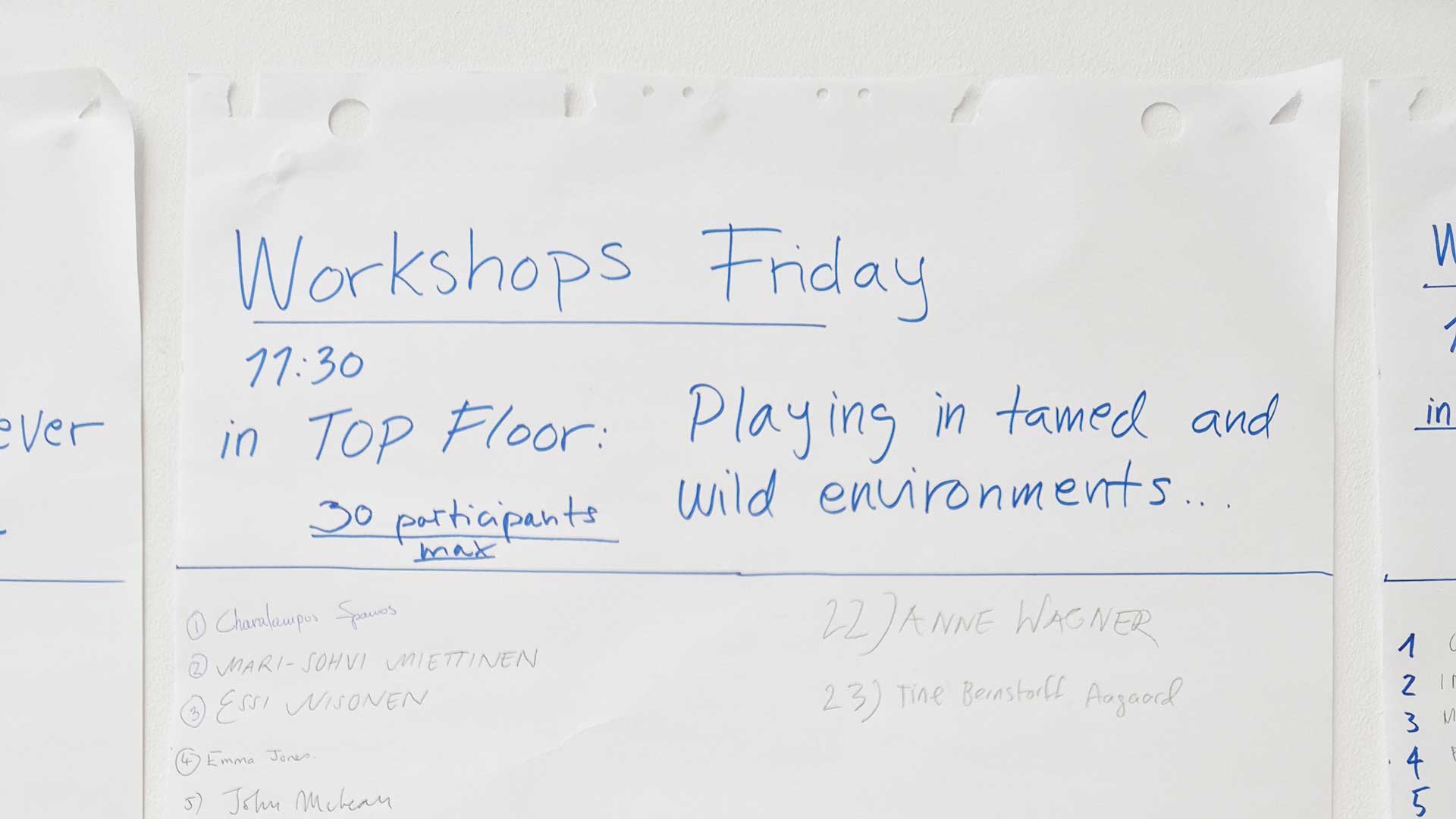
Figure 1: Sign-up sheet for the workshop, September 6, 2024. Image: courtesy of the authors
As social conflict intensifies, political crises deepen, and ecological degradation accelerates, higher education has been critiqued for its instrumental character, one that may constrain possibilities for transformative change toward sustainability (Barrineau et al. 2022). Even institutional frameworks of global governance, such as Education for Sustainable Development, have not escaped what the Brazilian emancipatory educator Paulo Freire called the “banking concept of education,” in which the learner is seen as an empty vessel to be filled with information (Freire 1972, Warlenius 2022). Higher education in the environmental social sciences and humanities tends to foreground the development of skills and competencies deemed relevant to addressing pre-framed sustainability issues, while often discouraging critique of business-as-usual models and avoiding deeper engagement with ecological concerns, the questioning of norms, values, and identities (Barrineau et al. 2022). Mainstream “universal” education privileges rationality, objectivity, and technical focus at the expense of emotional experience, leaving the current system ill-equipped to respond to the powerlessness many university students feel in the face of social and ecological injustice (Ibid.). This gap troubles educators like us, who face the need not only to help our students, and ourselves, reckon with the distressing realities of ecological precarity, but also to help them find tools to channel these experiences toward the possibility of informed action and empowerment.
As educators, we have turned to Freire’s critical approaches to education that see the learner as a co-creator of their own learning process. Whereas such approaches have remained largely marginal in the environmental sciences, they have been well developed in arts education and in informal learning environments. One such approach is the ecopedagogy movement, rooted in Freire’s critical pedagogy (Gadotti 2008, Warlenius 2022) where exercising consciousness and cognitive ability through interaction with the natural world challenges epistemologies of capitalism and imperialism in order to engage with pluriversal epistemologies and relations with the environment (Korsant 2024). Other approaches include Brazilian dramaturg Augusto Boal’s Theatre of the Oppressed, a theory and method that uses emancipatory theatre practices to reclaim the body as a repository of knowledge and memory (Boal, Howe, & Soeiro, 2019).
This quest for healthier and more just social and natural environments and for experiential and critical body work inspired by Freire and Boal informs our practices as artists, researchers, and educators in higher education in our effort to “untame” educational structures and “re-wild” knowledge production through embodied ways of learning and seeing the world. Our teaching areas range from global environment and development studies (Tatiana), urban environmental justice (Oldouz), to environmental communication and media production (Isabel). In all three, we have engaged with aesthetic and emancipatory theories of education to foster the creation of spaces and instances of care, critique, and freedom.
This orientation helps suspend the digital automation of education and the resulting homogenisation of knowledge. It is also a spatial praxis that invites physical experimentation and material engagement through play in lived environments, often difficult to reconcile with text-based outputs, academic rigour and epistemological control. Our mode of working has thus been to leave the domesticising “tame” institutional space and venture into the “wilderness” of lived experience. To do this, we use the notion of displacement of teaching and learning into different spaces to unsettle traditional teaching practices.
Our focus for the workshop was to create an embodied forum to share experiences based on these questions: what happens when teaching in non-artistic disciplines (ie. natural and social sciences where the arts do not have an established place), we borrow and steal from the performing arts to study policy, restructure academic texts through fiction writing, and brainstorm student projects on graffiti walls? What happens when we write course papers in dance studios, supervise dissertations in art galleries (or cemeteries), and do oral examinations on metro trains? How can these artistic approaches and unconventional places of teaching and learning help unsettle power asymmetries in (higher) educational structures and society at large?
In the industrial loft above Färgfabriken’s gallery spaces, we introduced techniques and methodologies from the performing arts to create a physical experience through embodiment and dialogue for sharing reflections, frustrations, and insights on teaching and learning in non-artistic settings.
The workshop at Färgfabriken was structured around five steps of engagement with embodied knowledge, drawing on postmodern physical theatre training techniques (Bogart and Landau 2005), movement theory (Laban 1971), and free writing (Elbow, 1973). Combining elements of storytelling, movement, and play, the workshop design seeks to unlock the dialogical potential of the relationship between body, space, and language. In this section, we share our techniques for others to borrow, modify, step–and–repeat.
- Location: indoors or outdoors
- Time: 60-90 minutes (depending on group size)
- Materials: chairs, white paper, coloured papers (minimum 3 colours or more, depending on group size), pens or pencils
- Initial setup for indoor setup: chairs placed in a circle with a coloured sheet under each chair, colours are placed randomly. Adapt for outdoor version with other materials and sitting on the ground (or on a tree).
- Facilitation: Minimum 2 people, one person facilitates while another organizes the space, keeps time, manages sound (if any), observes, documents, takes notes.
- Group size, works best with ~15 people, can be adapted to larger groups.
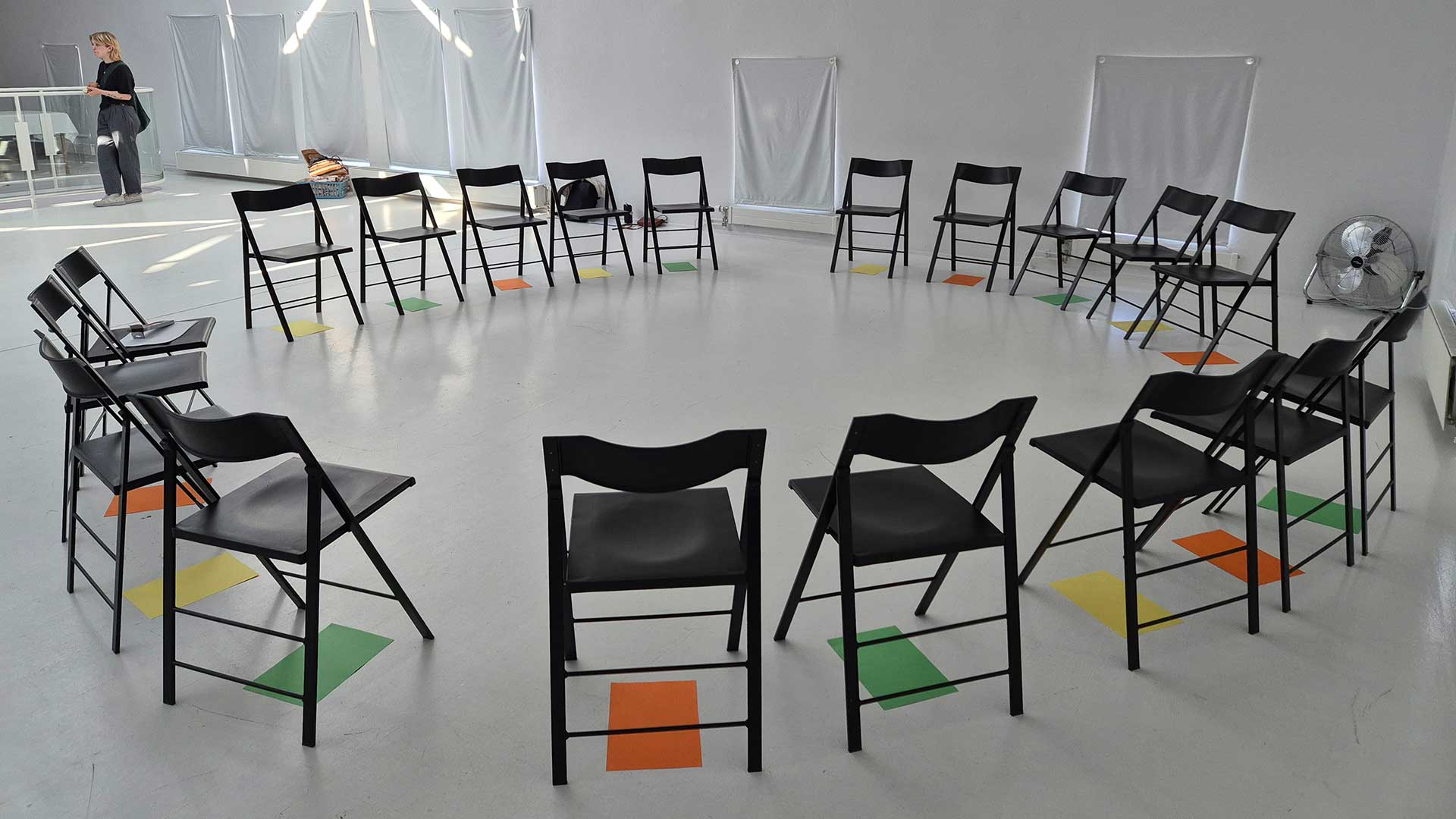
Figure 2: Storytelling moment with Oldouz Nejadi. Image: courtesy of the authors
Sitting in a circle, we opened with an intimate storytelling performance. As facilitators, each of us told a one-minute personal story drawn from an experience of transformation, learning or unlearning in “wild” spaces. For example, Isabel shared an experience of coming up with a creative idea while counting sheep in the Alps during a philosophy PhD course, while Tatiana talked about the parallels between flamenco drills and writing academic texts, and Oldouz about how dance evolved from a hobby to a way of thinking through the body. This not only set the tone for the session but also gave participants an early sense of what they might reflect on in terms of their own experiences of learning and unlearning.
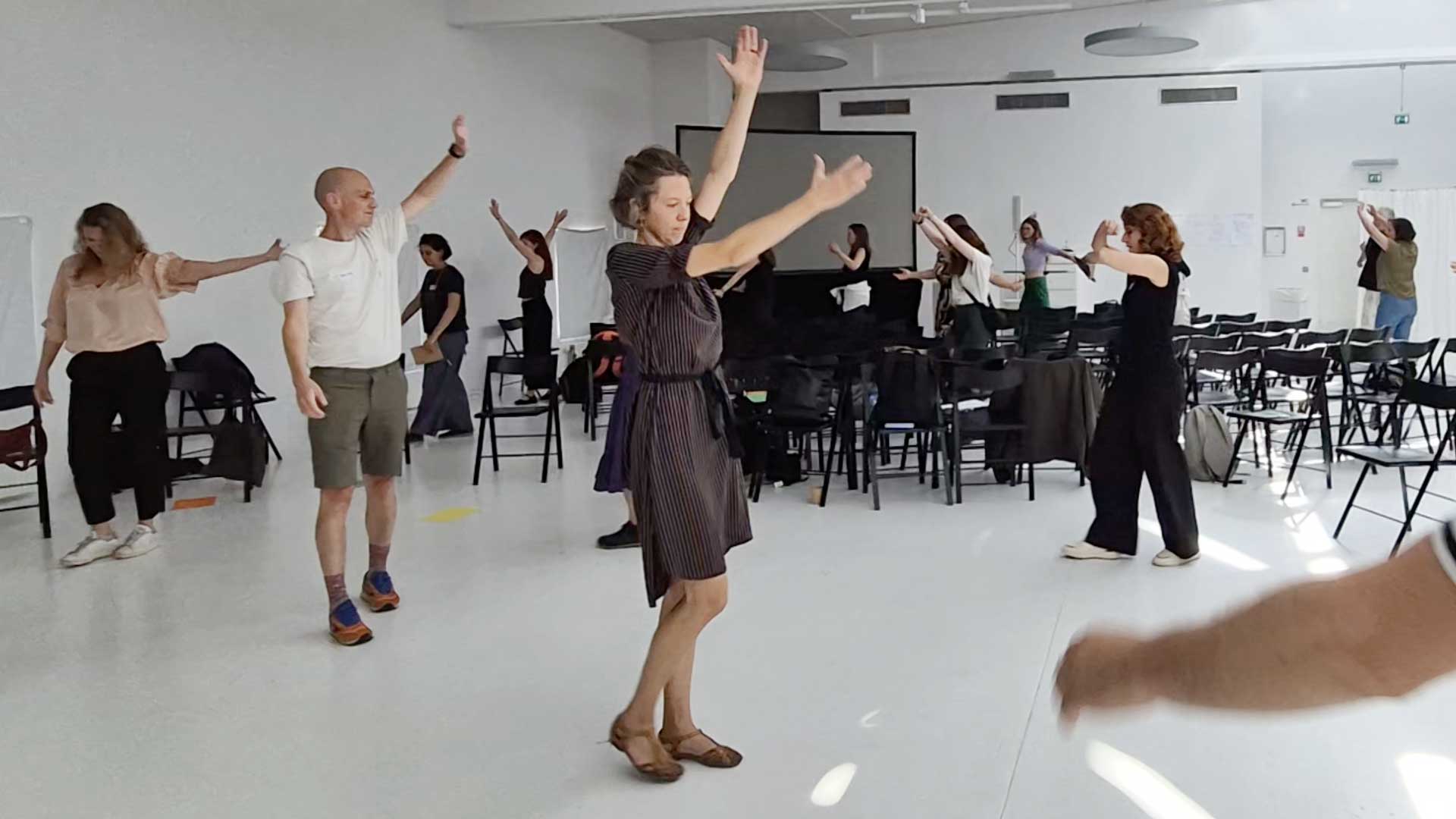
Figure 3: Participants explore the room through movement exercises. Image: courtesy of the authors
The second moment moved into a series of exercises drawing on improvisational theatre and dance, inviting participants to explore the space together and begin weaving physical connections with one another. The first was a “viewpoint exercise” (Bogart and Landau 2005), which invited participants to move through space in silence, with awareness of their own rhythms and positions as well as those of others. This was a practice of arriving and becoming fully present in the space, not only physically but relationally, acknowledging both familiar faces and those newly met.
From this collective navigation, the group flowed into a body awareness practice inspired by Laban Movement Analysis (Groff 1995). Participants were guided to explore their kinesphere – the personal bubble of space the body occupies – and discover how it shifts through space and interacts with the objects and people beyond it. Such body awareness exercises help individuals tune by gradually awakening a thread of thought and preparing to unfold it into an idea, a memory, a story, or an emotion.
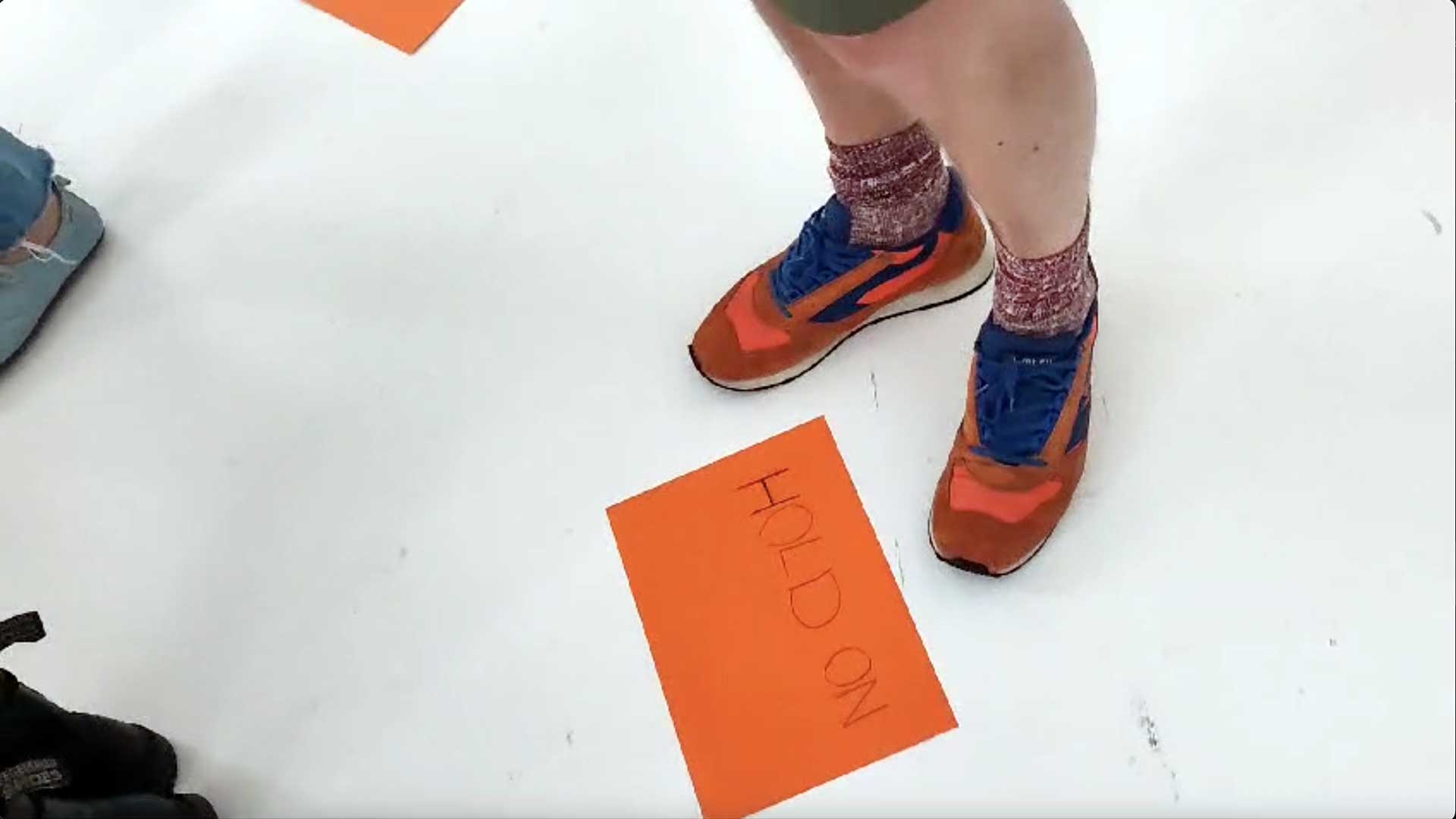
Figure 4: Participants walk around the keyword forest and stop when one suddenly finds a word that resonates with them. Image: courtesy of the authors
After the body exercises, we moved into a more reflective and individual sphere, channelling this unfolding thread into a 5-minute free-writing exercise based on Elbow’s (1973) method to “unload” thoughts on paper. Participants were invited to settle into the space however they liked, pick up a piece of paper, and write whatever came to mind, with the only condition being to keep writing. After a few minutes, they were handed a sheet of brightly coloured paper and asked to distil their writing into a single keyword that echoed or anchored something in what they had written. Some of the keywords that emerged from this exercise included: “experience”, “nightseeing”, “naked”, “calmness”, “pause”, “multispecies”, “disobedience”, “harvesting”, “disoriented”, “swimming”, “light”, “discomfort”, “air”, “expanding”, “waves”, “anxious”, “wings”, “comfortable”, and others.
Participants were then asked to place their coloured paper anywhere on the floor, forming what we call a “keyword forest.” Each participant then wandered among the words, as if walking through a forest, until they settled on a word that resonated with them, whether familiar or surprising, their own or someone else’s. By this stage, what had begun as a bodily and spatial exercise had transformed into a composition of collective thoughts with people moving and clustering around the keywords that united them through shared curiosity or resonance.
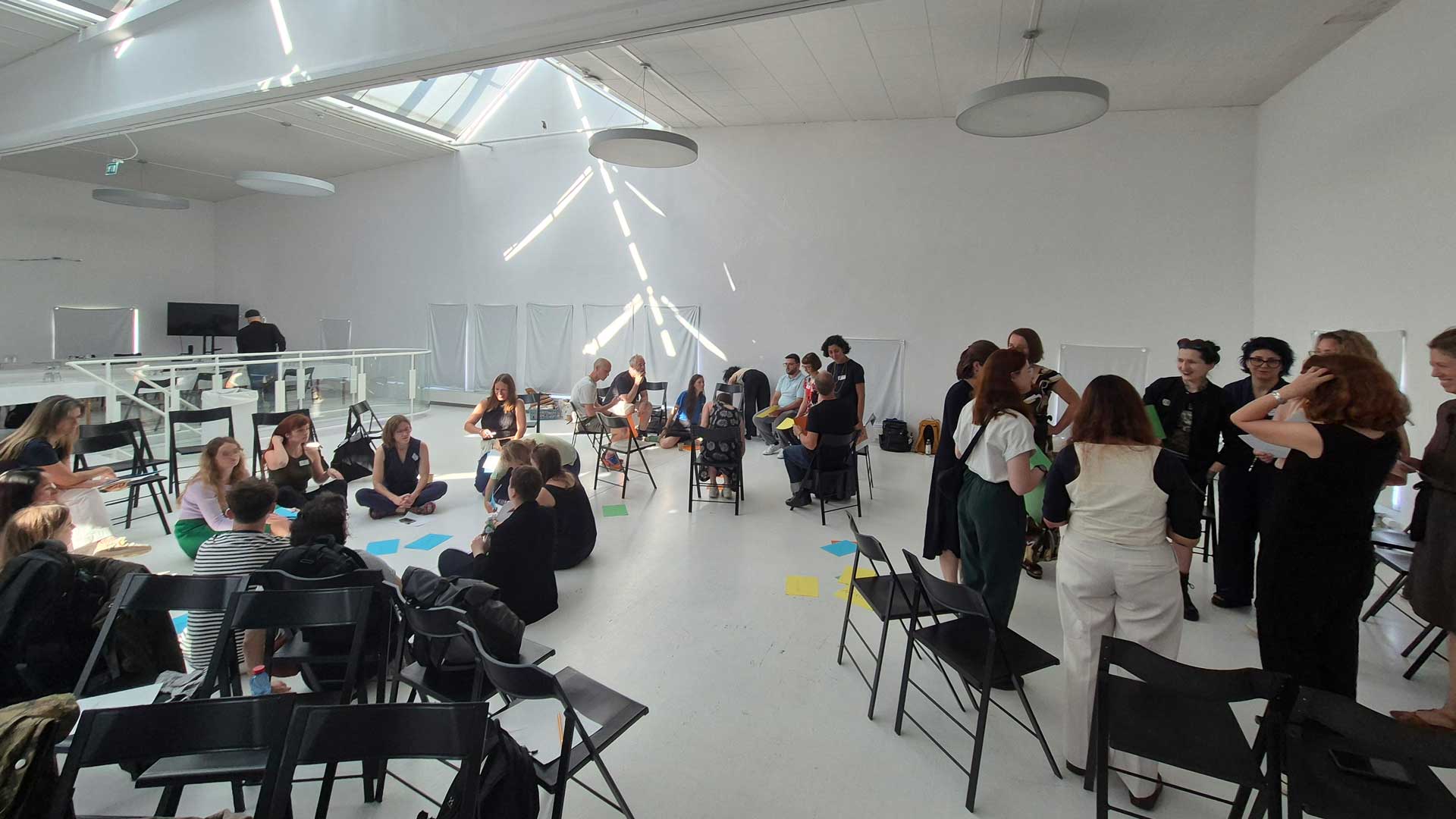
Figure 5: Participants formed smaller groups according to coloured paper, and form their own dyamics, sitting on the floor, on chairs, or standing up. Image: courtesy of the authors
Participants then formed groups according to the colour of the paper on which their chosen keyword was written. In these smaller groups, conversations began to take shape around thoughts sparked by the keywords and guided by personal connections to experiences of learning and unlearning. Each of us joined and helped facilitate one of the groups.
Each group developed its own spatial dynamics, as participants co-created structures that felt right for them. In the “blue” group, participants chose to sit on the floor in a circle, removed their shoes, and placed all the keywords in the centre. When ready to speak, a participant would pick up their word and share why it resonated with them, until someone else picked it up or chose another, and so forth, engaging with their own timing, or not speaking at all. The “orange/yellow” group remained standing, each person holding not their own chosen word but switching to another word that engaged or intrigued them, reflecting on the connections between the words which led to a conversation that unfolded around a web of shared concerns. In the “green” group, participants sat on chairs in a more conventional arrangement and conversed in a “popcorn” style, speaking whenever they felt ready. The embodied and artistic exercises practiced earlier (see Step 2) had shifted the atmosphere, inviting a different quality of engagement with the space, with one another, and with us.
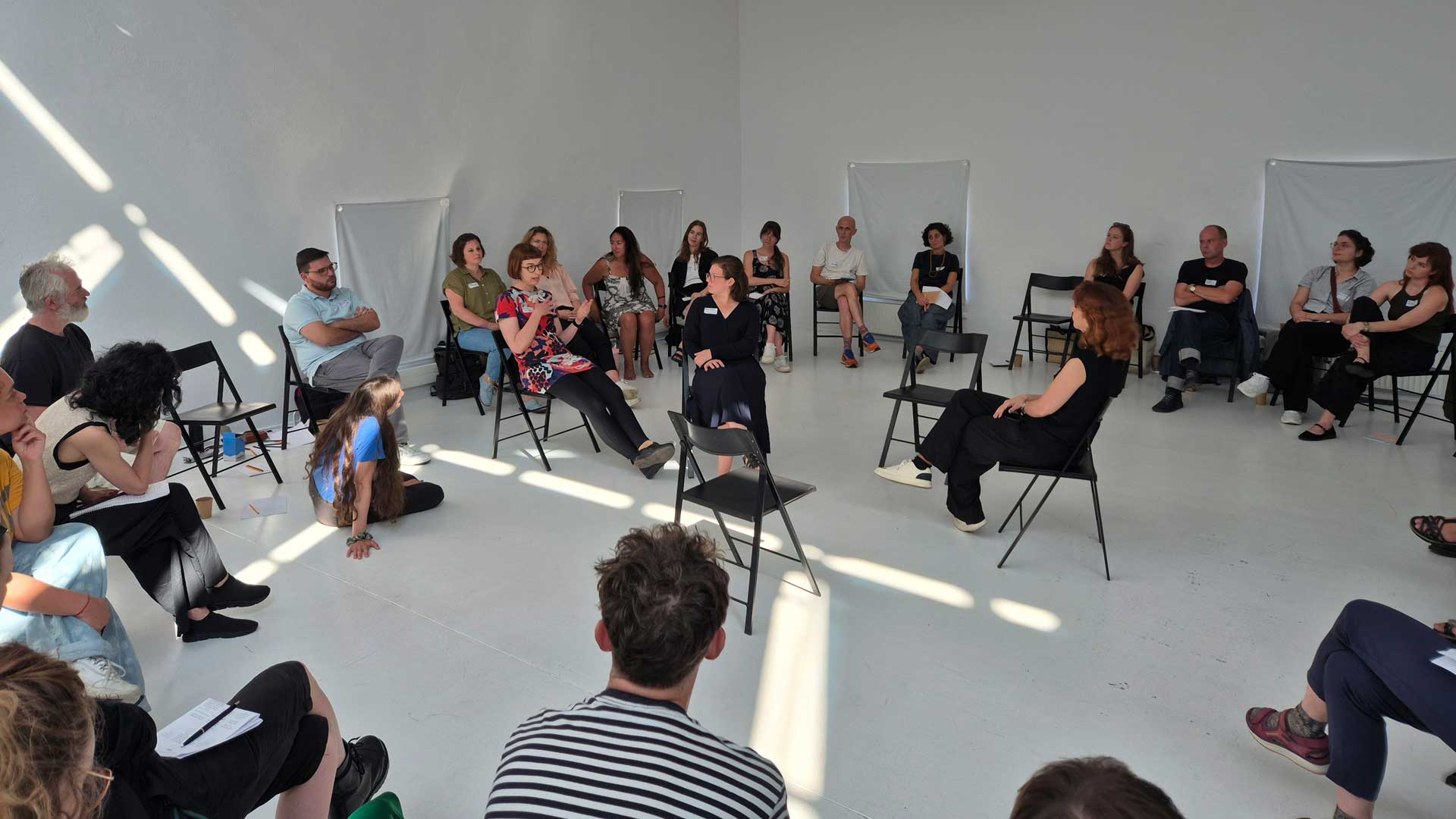
Fishbowl setting with outer and inner circle. Image: courtesy of the authors
To close the session, we turned to a fishbowl practice: a format designed to encourage open, fluid conversation. Two concentric circles of chairs were arranged in the space. The inner circle contained four chairs, three of which were occupied by volunteers willing to share their reflections, while the fourth was always left empty. The outer circle, where the remaining participants sat, created a space for listening to the conversation taking place within the inner circle. The fishbowl format allows for a dynamic flow: participants in the inner circle can leave whenever they wish, opening space for others to step in and contribute. This rhythm of listening and speaking gave the discussion a living quality that encouraged active, reciprocal engagement. During this closing dialogue, participants exchanged reflections on their experiences of teaching and learning/unlearning, both positive and negative. Themes included trust and control, exposure and comfort, frustration and moments of insight, conformism and disobedience, the city as a classroom, and much more.
This version of a participatory and generative bottom-up framework for an embodied and dialogic practice in the workshop opened up several questions about teaching, learning and unlearning discussed in each stage of the workshop, which anyone can step-and-repeat in a variety of other scenarios beyond the classroom, as a research method, as team-building or in conflict resolution. The five steps presented here are intended as a flexible scaffolding that can be deconstructed and reassembled depending on the purpose, group sizes, space, and duration.
This experience speaks to our theoretical commitments to emancipatory education: one that foregrounds emotional depth and empowerment through embodied work. We work with the body as a source of knowledge, energy, and empathy, and in doing so, the materiality of space becomes activated, channelling attention toward our bodies and our environments. We intend to resist the instrumental “banking” approach to education and to counter the disembodiment and alienating effects of digitalisation on students. Physical, spatial interaction enhances cognitive engagement, invites diverse perspectives, and expands epistemological possibilities. The circles, the collective movement, the act of sitting on the floor: these gestures enable participants to re-ground, re-connect, and re-activate the micropolitics of the body. In this way, our techniques draw on the relational work of bottom-up approaches such as from arts-based, grassroots movements, or informal learning environments, tapping into the spontaneity of human-to-human and human-to-environment connections.
Acknowledgements
We thank EcoJust (Ecologically and Socially Just Sustainability Transformations Research Platform) for supporting the workshop proposal and funding Södertörn University students in the Environment, Sustainability, and Global Development master’s programme to attend the workshop, and for enabling the creation of the EcoJust Studio, where we foster deep relationships between the arts and social environmental research.
References
Barrineau, S., Mendy, L., and Peters, A-K. 2022. “Emergentist Education and the Opportunities of Radical Futurity.” Futures 144 (December): 103062. Available at https://doi.org/10.1016/j.futures.2022.103062.
Boal, A., Julian, Howe, K., and Soeiro, J. 2019. The Routledge Companion to Theatre of the Oppressed. Routledge Theatre and Performance Companions. London and New York: Routledge, Taylor & Francis Group.
Bogart, A., and Landau, T. 2005. The Viewpoints Book: A Practical Guide to Viewpoints and Composition. 1st ed. New York and St. Paul, MN: Theatre Communications Group; distributed by Consortium Book Sales and Distribution.
Elbow, P. 1973. Writing Without Teachers. Oxford: Oxford University Press.
Gadotti, M. 2008. Educar para Sustentabilidade: Uma Contribuição para o Desenvolvimento Sustentável. São Paulo: Instituto Paulo Freire. Available at https://acervo.paulofreire.org/handle/7891/3080.
Groff, E. 1995. “Laban Movement Analysis: Charting the Ineffable Domain of Human Movement.” Journal of Physical Education, Recreation & Dance 66 (2): 27–30.
Freire, P. 1972. Pedagogy of the Oppressed. London: Sheed and Ward.
Korsant, C. 2024. “A Freirean Ecopedagogy or an Imposition of Values? The Pluriverse and the Politics of Environmental Education.” Globalizations 21 (2): 370–87. https://doi.org/10.1080/14747731.2022.2038830.
Laban, R. 1971. The Mastery of Movement. London: Macdonald & Evans.
UNESCO. n.d. “Education for Sustainable Development.” Available at https://www.unesco.org/en/sustainable-development/education.
Warlenius, Rikard. 2022. “Learning for Life: ESD, Ecopedagogy and the New Spirit of Capitalism.” The Journal of Environmental Education 53 (3): 141–53. Available at https://doi.org/10.1080/00958964.2022.2070102.
Learnings /Unlearnings: Environmental Pedagogies, Play, Policies, and Spatial Design responds to the call Designed Living Environment—Architecture, Form, Design, Art and Cultural Heritage in Public Spaces, and is funded by Formas—a Swedish Research Council for Sustainable Development with the Swedish National Board of Housing, Building and Planning; ArkDes; the Swedish National Heritage Board; and the Public Arts Agency Sweden, under the grant agreement number 2020-02402.
Thank you to Färgfabriken in Stockholm, especially to Karin Englund and Anna-Karin Wulgué for hosting Learnings/Unlearnings.
is an architect and PhD student at KTH School of Architecture, within the EU project CoNECT: Collective Networks of Everyday Community Resilience and Ecological Transition. For the last 12 years he has been a lecturer in design activism at Chalmers University of Technology. Both his research and awarded teaching experience (UIA Innovation in Architectural Education Award 2022-2023) focus on urban practices and pedagogies for social inclusion and community resilience. Emilio works with collaborative methodologies of co-creation, and design and build, together with local actors. His work engages with contexts highly challenged by diverse socioeconomic inequalities and urban injustices and builds on experience from active engagement in NGOs.
is a multidisciplinary group of researchers exploring sustainability challenges and environmental justice from a practice-based and artistic research approach, funded by the EcoJust research platform at Södertörn University. The group develops and deploys practice-based methods, pedagogies, and theories in interdisciplinary contexts through teaching, workshops, and public events in collaboration with artists and researchers in the environmental humanities and the environmental sciences. EcoJust Studio was created in May 2024 by Isabel Löfgren, Tatiana Sokolova, and Oldouz Nejadi. Isabel Löfgren is an interdisciplinary artist-researcher, writer, and educator based in Stockholm and Rio de Janeiro. She holds a PhD in Media & Communications from the European Graduate School (Switzerland) and an MFA from the Federal University of Rio de Janeiro (Brazil). She is Senior Lecturer in Media and Communication Studies at Södertörn University, Sweden, where her teaching focuses on visual culture, media production, and media activism for social, gender, and environmental justice. At Södertörn, she co-leads artistic research initiatives such as the EcoJust Studio, and the Visual Narratives and Planetary Transformations Studio (VISTRANS*), supported by the DigiTrans research platform. www.isabellofgren.se. Tatiana Sokolova is a doctoral student in Environmental Studies at the Department of Environment, Development and Sustainability Studies at Södertörn University, Sweden. She studies the interface between knowledge and politics of sustainability transitions and transformations, focusing on how power manifests in relationships between different societal actors in the co-production of sustainability knowledge, imagination, and action. Her research has involved critical analysis of sustainability and research policies, political ontologies and power dynamics of research programmes, knowledge-action configurations of deliberative democracy, and prefigurative legality of climate litigation. She is developing approaches to exploring socio-ecologically just sustainability transformations and the Anthropocene through creative writing, postmodern theatre, and Theatre of the Oppressed. Oldouz Nejadibabadaei is a doctoral student in Environmental Studies at the Department of Environment, Development and Sustainability Studies at Södertörn University, Sweden, researching social-spatial inequalities in segregated urban areas and the role of urban planning in advancing environmental justice in marginalised communities. She has experience in performing arts and working with movement analysis techniques.
holds an honours degree in Architecture from RMIT University, Melbourne and has extensive experience across various industry sectors, including architecture, interior design, urban design, and statutory planning. She is currently a PhD candidate at the Queensland University of Technology (QUT), Brisbane where her research focuses on how spatial practice can promote health, wellbeing, and social belonging in shared intergenerational settings. Alongside her research, Wanjiru serves as a sessional academic at QUT’s School of Architecture and Built Environment where she instructs courses in architecture, interior design, and construction.
is PhD student at Royal Holloway University Geography Department. As an environmental educator and creative practitioner Indira works with sonic methods to tease out children’s already existing and complex ecological entanglements. Foregrounding the nexus between listening and sounding; the material and the imagined, Indira has developed the methodology of sound mapping to engage and intervene in the often ’unspoken’ and ‘unheard’, yet deeply felt, sonic conditioning of space. Indira’s work seeks to grapple with the complexities of our inter-relational climate-changing world and playfully explore the re-negotiation of children’s sense of agency within it, through sound.
is a Senior Lecturer in the Department of Education, Phycology and Social Work at Mid Sweden University. She holds a PhD in Early Childhood Education and Care and is a trained physical geographer. Her research interests focus on environmental and sustainability issues, alongside climate change within early childhood research and education. Her work is underpinned by feminist posthumanist and new materialist theories and methodologies.
Ph.D., graduated from the METU Faculty of Architecture with the second-best degree and received her M.Arch and Ph.D. degrees from METU, where she is currently a research assistant. She is a member of the EAHN research group “Building Word Image.” Within the Getty Foundation – Keeping It Modern project, she worked on the curatorial team of the Archive Exhibitions shown at METU and TU Delft. She has co-coordinated drawing and design workshops, participated in international conferences, and published in international journals and online architectural platforms. Her research focuses on art–architecture relations, nineteenth-century German architectural theory, methodologies of making and concept of Bildung.